Last update
8/12/2026
Reviewed By
Infographics
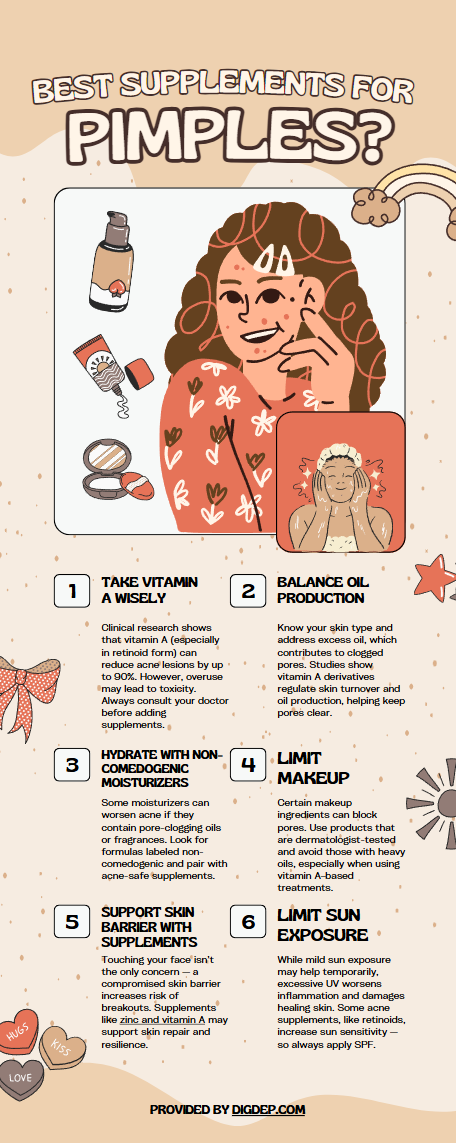
Overview

SCIENTIFIC SCORE
Possibly Effective
Based on 18 Researches
7.1
USERS' SCORE
Moderately Good
Based on 8 Reviews
7.4

Supplement Facts
Serving Size: 1 Tablet
Amount Per Serving
%DV
Vitamin C (as Ascorbic Acid)
1,000 mg
1,111%
Top Medical Research Studies
9
We explored the potential of sodium ascorbyl phosphate (SAP), a stable form of vitamin C, in preventing and treating acne vulgaris. The study included a time-kill analysis showing that a 1% SAP formulation reduced the harmful bacteria Propionibacterium acnes by a significant log reduction of 5 after 8 hours. This demonstrates the strong antimicrobial properties of SAP against acne-causing bacteria.
Additionally, we observed an in vivo study with 20 participants, where the SAP formulation effectively prevented up to 40% of UVA-induced sebum oxidation, suggesting it can help reduce inflammation associated with acne. In another open-label study involving 60 volunteers over 12 weeks, a 5% SAP lotion was rated as excellent or good in effectiveness by 76.9% of the participants, outperforming a commonly prescribed acne treatment.
Overall, our findings indicate that sodium ascorbyl phosphate could serve as an effective, non-antibiotic option for both the prevention and treatment of acne, making it an attractive addition to cosmetic products due to its lack of side effects.
Additionally, we observed an in vivo study with 20 participants, where the SAP formulation effectively prevented up to 40% of UVA-induced sebum oxidation, suggesting it can help reduce inflammation associated with acne. In another open-label study involving 60 volunteers over 12 weeks, a 5% SAP lotion was rated as excellent or good in effectiveness by 76.9% of the participants, outperforming a commonly prescribed acne treatment.
Overall, our findings indicate that sodium ascorbyl phosphate could serve as an effective, non-antibiotic option for both the prevention and treatment of acne, making it an attractive addition to cosmetic products due to its lack of side effects.
Read More
8
Vitamin C derivative lotion shows significant acne improvement
A double-blind controlled trial with 50 participants tested a vitamin C derivative lotion called sodium L-ascorbyl-2-phosphate (APS) at 5% strength against a placebo over 12 weeks. We found that APS significantly improved acne across all measured outcomes—including lesion counts and both investigator and patient assessments—with a safety profile comparable to placebo. This antioxidant approach works by reducing sebum oxidation, which contributes to acne development, making APS a promising new standalone treatment option for acne patients.
Read More
8
We aimed to explore how magnesium ascorbyl phosphate (MAP), a stable form of vitamin C, influences acne by evaluating its impact on inflammatory responses in skin cells known as sebocytes. The study employed a robust methodology, where we treated cultured sebocytes with different solutions: MAP, lipopolysaccharide (LPS), and a combination of both.
Following treatment, we measured the expression of inflammatory markers, cytokines, and proteins involved in skin inflammation and the healing process. Our findings revealed that MAP effectively reduced the heightened inflammatory responses caused by LPS, suggesting it has a calming effect on acne-related inflammation.
Additionally, we observed a notable decrease in lipid peroxidation, a contributor to skin damage, after treatment with MAP. This means that vitamin C may not only help reduce inflammation but could also protect skin cells from oxidative stress, promoting healthier skin overall.
In summary, our study strengthens the idea that using MAP can be a beneficial addition to acne treatments, potentially leading to improved skin conditions.
Following treatment, we measured the expression of inflammatory markers, cytokines, and proteins involved in skin inflammation and the healing process. Our findings revealed that MAP effectively reduced the heightened inflammatory responses caused by LPS, suggesting it has a calming effect on acne-related inflammation.
Additionally, we observed a notable decrease in lipid peroxidation, a contributor to skin damage, after treatment with MAP. This means that vitamin C may not only help reduce inflammation but could also protect skin cells from oxidative stress, promoting healthier skin overall.
In summary, our study strengthens the idea that using MAP can be a beneficial addition to acne treatments, potentially leading to improved skin conditions.
Read More
Most Useful Reviews
0
No discernible effect
3 people found this helpful
No effect. I thought this would effectively treat acne, dullness, whitening, and pores. I took two tablets morning and night, but there was no change, which was very disappointing. I suspect a time release effect, as my urine colour didn't turn yellow.
Read More
6
Calming acne sensation
1 people found this helpful
It's okay. The taste didn't match in the end. I've been taking this with silica and MSM. With numerous acne, I feel like it's starting to calm down.
Read More
9
Acne improved significantly
At first, I took one tablet daily but felt no effect. Since it's water-soluble vitamin C, I tried taking three times a day, and my acne vanished, leaving my skin beautiful. Given the current hype around high vitamin C intake, I think it's worth trying again at this price.
Read More


Medical Researches
SCIENTIFIC SCORE
Possibly Effective
Based on 18 Researches
7.1
- All Researches
9
We aimed to understand how a novel formulation combining vitamin C and quercetin can help treat acne. Our study focused on creating small liposomal structures called aspasomes that enhance the delivery of quercetin, a potent antioxidant, onto the skin.
Throughout our research, we thoroughly characterized these aspasomes for their size, stability, and how well they could penetrate the skin. One exciting finding was that these specialized nanovesicles not only preserved the antioxidant benefits of quercetin, but also demonstrated a stronger antibacterial effect against acne-causing bacteria compared to quercetin alone.
In an exploratory clinical trial involving 20 participants with acne, we observed considerable improvements. The results revealed a 77.9% reduction in inflammatory lesions and significant decreases in both non-inflammatory lesions and total acne lesions. These findings suggest that our vitamin C-based formula holds promise in managing acne and could potentially be used for other skin conditions in the future.
Throughout our research, we thoroughly characterized these aspasomes for their size, stability, and how well they could penetrate the skin. One exciting finding was that these specialized nanovesicles not only preserved the antioxidant benefits of quercetin, but also demonstrated a stronger antibacterial effect against acne-causing bacteria compared to quercetin alone.
In an exploratory clinical trial involving 20 participants with acne, we observed considerable improvements. The results revealed a 77.9% reduction in inflammatory lesions and significant decreases in both non-inflammatory lesions and total acne lesions. These findings suggest that our vitamin C-based formula holds promise in managing acne and could potentially be used for other skin conditions in the future.
Read More
9
We conducted a study to explore the effectiveness of two forms of vitamin C—ascorbyl palmitate (AP) and sodium ascorbyl phosphate (SAP)—in managing sebum production on the skin. Through a single-blinded, placebo-controlled trial involving 11 healthy female volunteers, we compared the effects of a multiple emulsion containing these compounds with a control that lacked them.
Over 90 days, participants applied the vitamin C formulation to one cheek and the control to the other. We measured sebum levels using a non-invasive device called a Sebumeter at different time intervals. Our results demonstrated that the combination of AP and SAP achieved notable antioxidant activity and effectively reduced facial oiliness compared to the control.
Ultimately, we found that incorporating vitamin C into skincare routines can be a promising solution for controlling excess facial sebum, which is often linked to oily skin and acne. However, while the study highlights the role of these antioxidants in sebum regulation, it does not provide a definitive conclusion on their isolated effects solely for acne treatment.
Over 90 days, participants applied the vitamin C formulation to one cheek and the control to the other. We measured sebum levels using a non-invasive device called a Sebumeter at different time intervals. Our results demonstrated that the combination of AP and SAP achieved notable antioxidant activity and effectively reduced facial oiliness compared to the control.
Ultimately, we found that incorporating vitamin C into skincare routines can be a promising solution for controlling excess facial sebum, which is often linked to oily skin and acne. However, while the study highlights the role of these antioxidants in sebum regulation, it does not provide a definitive conclusion on their isolated effects solely for acne treatment.
Read More
9
We explored the potential of sodium ascorbyl phosphate (SAP), a stable form of vitamin C, in preventing and treating acne vulgaris. The study included a time-kill analysis showing that a 1% SAP formulation reduced the harmful bacteria Propionibacterium acnes by a significant log reduction of 5 after 8 hours. This demonstrates the strong antimicrobial properties of SAP against acne-causing bacteria.
Additionally, we observed an in vivo study with 20 participants, where the SAP formulation effectively prevented up to 40% of UVA-induced sebum oxidation, suggesting it can help reduce inflammation associated with acne. In another open-label study involving 60 volunteers over 12 weeks, a 5% SAP lotion was rated as excellent or good in effectiveness by 76.9% of the participants, outperforming a commonly prescribed acne treatment.
Overall, our findings indicate that sodium ascorbyl phosphate could serve as an effective, non-antibiotic option for both the prevention and treatment of acne, making it an attractive addition to cosmetic products due to its lack of side effects.
Additionally, we observed an in vivo study with 20 participants, where the SAP formulation effectively prevented up to 40% of UVA-induced sebum oxidation, suggesting it can help reduce inflammation associated with acne. In another open-label study involving 60 volunteers over 12 weeks, a 5% SAP lotion was rated as excellent or good in effectiveness by 76.9% of the participants, outperforming a commonly prescribed acne treatment.
Overall, our findings indicate that sodium ascorbyl phosphate could serve as an effective, non-antibiotic option for both the prevention and treatment of acne, making it an attractive addition to cosmetic products due to its lack of side effects.
Read More
8
Vitamin C derivative lotion shows significant acne improvement
A double-blind controlled trial with 50 participants tested a vitamin C derivative lotion called sodium L-ascorbyl-2-phosphate (APS) at 5% strength against a placebo over 12 weeks. We found that APS significantly improved acne across all measured outcomes—including lesion counts and both investigator and patient assessments—with a safety profile comparable to placebo. This antioxidant approach works by reducing sebum oxidation, which contributes to acne development, making APS a promising new standalone treatment option for acne patients.
Read More
8
Combination treatment significantly outperforms individual ingredients
We evaluated how well two topical treatments work against inflammatory acne lesions. Sodium ascorbyl phosphate (SAP), a form of vitamin C, reduced inflammatory lesions by about 20% after 4 weeks and 48% after 8 weeks. Retinol performed similarly, achieving 22% and 50% reduction over the same timeframes.
The combination of both ingredients proved significantly more effective, reducing lesions by 29% at 4 weeks and 63% at 8 weeks. This synergistic effect likely stems from how these ingredients work together—vitamin C combats lipid damage and reduces sebum, while retinol removes dead skin cells and enhances vitamin C absorption through its anti-inflammatory actions.
The combination of both ingredients proved significantly more effective, reducing lesions by 29% at 4 weeks and 63% at 8 weeks. This synergistic effect likely stems from how these ingredients work together—vitamin C combats lipid damage and reduces sebum, while retinol removes dead skin cells and enhances vitamin C absorption through its anti-inflammatory actions.
Read More
User Reviews
USERS' SCORE
Moderately Good
Based on 8 Reviews
7.4
- All Reviews
- Positive Reviews
- Negative Reviews
0
No discernible effect
3 people found this helpful
No effect. I thought this would effectively treat acne, dullness, whitening, and pores. I took two tablets morning and night, but there was no change, which was very disappointing. I suspect a time release effect, as my urine colour didn't turn yellow.
Read More
6
Calming acne sensation
1 people found this helpful
It's okay. The taste didn't match in the end. I've been taking this with silica and MSM. With numerous acne, I feel like it's starting to calm down.
Read More
9
Acne improved significantly
At first, I took one tablet daily but felt no effect. Since it's water-soluble vitamin C, I tried taking three times a day, and my acne vanished, leaving my skin beautiful. Given the current hype around high vitamin C intake, I think it's worth trying again at this price.
Read More
8
Skin improved noticeably
I will continue taking this! I take one pill daily; it’s easy to swallow and doesn’t get stuck. It’s my first sustained release experience, but I love how my skin feels and looks smooth by morning. My acne scars have started to fade, and I’m hopeful they will disappear with a few more months' use!
Read More
8
Significant acne improvement
Effective for adolescent acne. My junior high school daughter’s red acne improved significantly overnight. The taste is sour, but the skin-beautifying effects of vitamin C are genuinely felt.
Read More
Frequently Asked Questions
8
Significant acne improvement
Effective for adolescent acne. My junior high school daughter’s red acne improved significantly overnight. The taste is sour, but the skin-beautifying effects of vitamin C are genuinely felt.
6
Possibly acne prevention
I bought it for its continuous release. I usually eat vegetables and took one at night. Although uncertain about the effect, after a month and a half, I didn’t get the usual acne before my period. I think this may be the reason.
0
No discernible effect
3 people found this helpful
No effect. I thought this would effectively treat acne, dullness, whitening, and pores. I took two tablets morning and night, but there was no change, which was very disappointing. I suspect a time release effect, as my urine colour didn't turn yellow.
9
Acne improved significantly
At first, I took one tablet daily but felt no effect. Since it's water-soluble vitamin C, I tried taking three times a day, and my acne vanished, leaving my skin beautiful. Given the current hype around high vitamin C intake, I think it's worth trying again at this price.
8
Skin improved noticeably
I will continue taking this! I take one pill daily; it’s easy to swallow and doesn’t get stuck. It’s my first sustained release experience, but I love how my skin feels and looks smooth by morning. My acne scars have started to fade, and I’m hopeful they will disappear with a few more months' use!
6
Calming acne sensation
1 people found this helpful
It's okay. The taste didn't match in the end. I've been taking this with silica and MSM. With numerous acne, I feel like it's starting to calm down.
9
We explored the potential of sodium ascorbyl phosphate (SAP), a stable form of vitamin C, in preventing and treating acne vulgaris. The study included a time-kill analysis showing that a 1% SAP formulation reduced the harmful bacteria Propionibacterium acnes by a significant log reduction of 5 after 8 hours. This demonstrates the strong antimicrobial properties of SAP against acne-causing bacteria.
Additionally, we observed an in vivo study with 20 participants, where the SAP formulation effectively prevented up to 40% of UVA-induced sebum oxidation, suggesting it can help reduce inflammation associated with acne. In another open-label study involving 60 volunteers over 12 weeks, a 5% SAP lotion was rated as excellent or good in effectiveness by 76.9% of the participants, outperforming a commonly prescribed acne treatment.
Overall, our findings indicate that sodium ascorbyl phosphate could serve as an effective, non-antibiotic option for both the prevention and treatment of acne, making it an attractive addition to cosmetic products due to its lack of side effects.
Additionally, we observed an in vivo study with 20 participants, where the SAP formulation effectively prevented up to 40% of UVA-induced sebum oxidation, suggesting it can help reduce inflammation associated with acne. In another open-label study involving 60 volunteers over 12 weeks, a 5% SAP lotion was rated as excellent or good in effectiveness by 76.9% of the participants, outperforming a commonly prescribed acne treatment.
Overall, our findings indicate that sodium ascorbyl phosphate could serve as an effective, non-antibiotic option for both the prevention and treatment of acne, making it an attractive addition to cosmetic products due to its lack of side effects.
8
Vitamin C derivative lotion shows significant acne improvement
A double-blind controlled trial with 50 participants tested a vitamin C derivative lotion called sodium L-ascorbyl-2-phosphate (APS) at 5% strength against a placebo over 12 weeks. We found that APS significantly improved acne across all measured outcomes—including lesion counts and both investigator and patient assessments—with a safety profile comparable to placebo. This antioxidant approach works by reducing sebum oxidation, which contributes to acne development, making APS a promising new standalone treatment option for acne patients.
7
We explored the potential benefits of using vitamin C alongside adapalene, a well-known topical treatment for acne. This study focused on creating a gel that combines nanostructured lipid carriers loaded with adapalene and vitamin C. By using a method called high pressure homogenization, researchers prepared these carriers to effectively deliver the active ingredients through the skin.
The results showed that the combination of the two active components improved the targeting of the epidermal layer of the skin, which is where acne develops. Additionally, the introduction of vitamin C appeared to provide an adjunct effect in the treatment of acne in male Wistar rats. We noted that while vitamin C is widely recognized for its skin benefits, this study emphasized its role when used with adapalene rather than as a standalone treatment.
Overall, this research highlights the synergetic effect of vitamin C in conjunction with adapalene for acne therapy under physiological conditions, suggesting that combining these agents could enhance the effectiveness of topical acne treatments.
The results showed that the combination of the two active components improved the targeting of the epidermal layer of the skin, which is where acne develops. Additionally, the introduction of vitamin C appeared to provide an adjunct effect in the treatment of acne in male Wistar rats. We noted that while vitamin C is widely recognized for its skin benefits, this study emphasized its role when used with adapalene rather than as a standalone treatment.
Overall, this research highlights the synergetic effect of vitamin C in conjunction with adapalene for acne therapy under physiological conditions, suggesting that combining these agents could enhance the effectiveness of topical acne treatments.
7
Vitamin C's acne treatment potential
We explored the effectiveness of vitamin C in treating acne, focusing on its antioxidant and anti-inflammatory properties. Vitamin C, also known as L-ascorbic acid, is a natural component of our skin and plays a vital role in protecting it from oxidative stress.
Our findings highlight that vitamin C can be beneficial for acne control, although to truly maximize its effects, proper formulations are essential. The study indicates that when used in combination with other vitamins such as E and B3, vitamin C may have enhanced efficacy.
However, it's important to note that while vitamin C shows promise, it should be viewed as part of a broader skincare routine rather than a standalone solution for acne treatment.
Our findings highlight that vitamin C can be beneficial for acne control, although to truly maximize its effects, proper formulations are essential. The study indicates that when used in combination with other vitamins such as E and B3, vitamin C may have enhanced efficacy.
However, it's important to note that while vitamin C shows promise, it should be viewed as part of a broader skincare routine rather than a standalone solution for acne treatment.
References
- Sharara MA, Fawaz GA, El Samahy MH. Efficacy of tranexamic acid solution versus vitamin C solution after micro-needling in treatment of persistent post acne erythema: a split face clinical and 3DAntera camera comparative study. Arch Dermatol Res. 2024;317:150. 10.1007/s00403-024-03582-0
- Hu JK, Quinonez RL, Antasiuk V, Waibel J. Treatment of Acne Vulgaris-Associated Post-Inflammatory Dyschromia With Combination of Non-Ablative Laser Therapy and Topical Antioxidants. J Drugs Dermatol. 2024;23:769. 10.36849/JDD.8309
- Abbas MAM, Elgamal EEAE, Zaky MS, Elsaie ML. Microneedling with topical vitamin C versus microneedling with topical insulin in the treatment of atrophic post-acne scars: A split-face study. Dermatol Ther. 2022;35:e15376. 10.1111/dth.15376
- Vasanth S, Dubey A, G S R, Lewis SA, Ghate VM, et al. Development and Investigation of Vitamin C-Enriched Adapalene-Loaded Transfersome Gel: a Collegial Approach for the Treatment of Acne Vulgaris. AAPS PharmSciTech. 2020;21:61. 10.1208/s12249-019-1518-5
- Iinuma K, Noguchi N, Nakaminami H, Sasatsu M, Nishijima S, et al. Susceptibility of Propionibacterium acnes isolated from patients with acne vulgaris to zinc ascorbate and antibiotics. Clin Cosmet Investig Dermatol. 2011;4:161. 10.2147/CCID.S23840
- Woolery-Lloyd H, Baumann L, Ikeno H. Sodium L-ascorbyl-2-phosphate 5% lotion for the treatment of acne vulgaris: a randomized, double-blind, controlled trial. J Cosmet Dermatol. 2010;9:22. 10.1111/j.1473-2165.2010.00480.x
- Ruamrak C, Lourith N, Natakankitkul S. Comparison of clinical efficacies of sodium ascorbyl phosphate, retinol and their combination in acne treatment. Int J Cosmet Sci. 2009;31:41. 10.1111/j.1468-2494.2008.00479.x
- Golonka I, Łukasiewicz IW, Sebastiańczyk A, Greber KE, Sawicki W, et al. The Influence of the Amphiphilic Properties of Peptides on the Phosphatidylinositol Monolayer in the Presence of Ascorbic Acid. Int J Mol Sci. 2024;25. 10.3390/ijms252312484
- Sawutdeechaikul P, Kanokrungsee S, Sahaspot T, Thadvibun K, Banlunara W, et al. Detachable dissolvable microneedles: intra-epidermal and intradermal diffusion, effect on skin surface, and application in hyperpigmentation treatment. Sci Rep. 2021;11:24114. 10.1038/s41598-021-03503-5
- Amer SS, Nasr M, Abdel-Aziz RTA, Moftah NH, El Shaer A, et al. Cosm-nutraceutical nanovesicles for acne treatment: Physicochemical characterization and exploratory clinical experimentation. Int J Pharm. 2020;577:119092. 10.1016/j.ijpharm.2020.119092
- Khan H, Akhtar N, Ali A. Assessment of Combined Ascorbyl Palmitate (AP) and Sodium Ascorbyl Phosphate (SAP) on Facial Skin Sebum Control in Female Healthy Volunteers. Drug Res (Stuttg). 2017;67:52. 10.1055/s-0042-118171
- Jain A, Garg NK, Jain A, Kesharwani P, Jain AK, et al. A synergistic approach of adapalene-loaded nanostructured lipid carriers, and vitamin C co-administration for treating acne. Drug Dev Ind Pharm. 2016;42:897. 10.3109/03639045.2015.1104343
- Lee WJ, Kim SL, Choe YS, Jang YH, Lee SJ, et al. Magnesium Ascorbyl Phosphate Regulates the Expression of Inflammatory Biomarkers in Cultured Sebocytes. Ann Dermatol. 2015;27:376. 10.5021/ad.2015.27.4.376
- Ikeno H, Apel M, Zouboulis C, Luger TA, Böhm M. L-Ascorbyl-2-phosphate attenuates NF-κB signaling in SZ95 sebocytes without affecting IL-6 and IL-8 secretion. Arch Dermatol Res. 2015;307:595. 10.1007/s00403-015-1565-z
- Chawla S. Split Face Comparative Study of Microneedling with PRP Versus Microneedling with Vitamin C in Treating Atrophic Post Acne Scars. J Cutan Aesthet Surg. 2014;7:209. 10.4103/0974-2077.150742
- Burgess C. Topical vitamins. J Drugs Dermatol. 2008;7:s2. PubMed
- Klock J, Ikeno H, Ohmori K, Nishikawa T, Vollhardt J, et al. Sodium ascorbyl phosphate shows in vitro and in vivo efficacy in the prevention and treatment of acne vulgaris. Int J Cosmet Sci. 2005;27:171. 10.1111/j.1467-2494.2005.00263.x
- Seshagiri RD, Shetty L, Surpur T, Kulkarni V, Singh AK, et al. Comparative evaluation of the efficacy of intradermal platelet-rich plasma with and without vitamin C using dermaroller for postacne atrophic scars - A clinical study. Natl J Maxillofac Surg. 2025;16:530. 10.4103/njms.njms_78_24

