Last update
3/19/2026
Reviewed By
Infographics
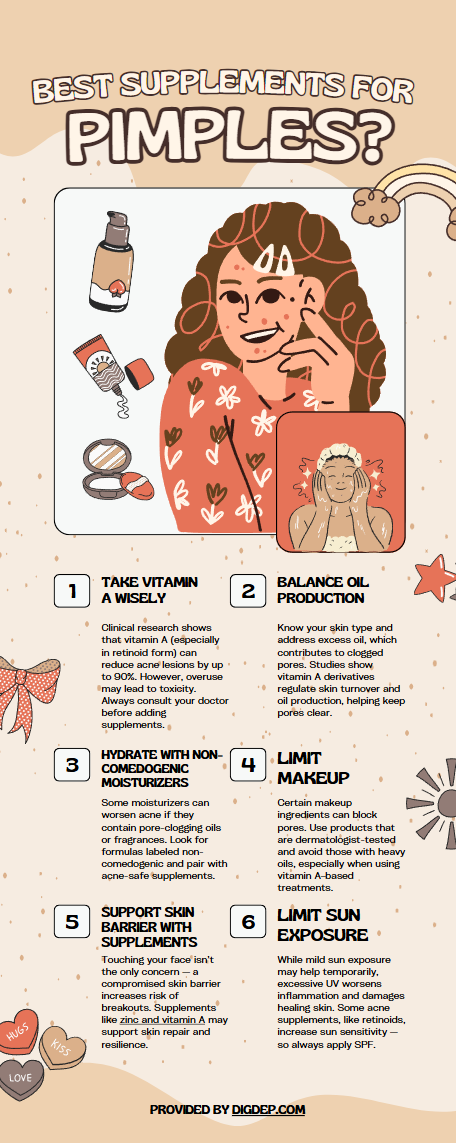
Overview

SCIENTIFIC SCORE
Questionable
Based on 7 Researches
6.9
USERS' SCORE
Good
Based on 3 Reviews
8.4

Supplement Facts
Serving Size: 1 Veggie Capsule
Amount Per Serving
%DV
Vitamin B12 (as Methylcobalamin)
1,500 mcg
62500%
Top Medical Research Studies
9.5
We observed five notable cases of acneiform eruptions linked to vitamin B12 in women aged 21 to 62. These eruptions manifested between one week and five months after starting vitamin B12 therapy.
The primary symptoms consisted of papules and pustules appearing mainly on the face. In three of the patients, these skin issues also extended to areas like the neck, shoulders, chest, and upper back, but interestingly, there were no signs of comedones or cysts.
Out of the five women, two had particularly high levels of vitamin B12 in their blood. A closer look at one patient's skin under a microscope revealed eosinophilic folliculitis, a type of inflammation in hair follicles. Fortunately, all patients experienced spontaneous and complete recovery within three to six weeks after stopping vitamin B12 treatment.
Overall, while vitamin B12 did not provide a benefit for acne treatment, it highlighted an unusual side effect of acne-like symptoms in these cases.
The primary symptoms consisted of papules and pustules appearing mainly on the face. In three of the patients, these skin issues also extended to areas like the neck, shoulders, chest, and upper back, but interestingly, there were no signs of comedones or cysts.
Out of the five women, two had particularly high levels of vitamin B12 in their blood. A closer look at one patient's skin under a microscope revealed eosinophilic folliculitis, a type of inflammation in hair follicles. Fortunately, all patients experienced spontaneous and complete recovery within three to six weeks after stopping vitamin B12 treatment.
Overall, while vitamin B12 did not provide a benefit for acne treatment, it highlighted an unusual side effect of acne-like symptoms in these cases.
Read More
9.5
Vitamin B12 influences acne development
We observed a fascinating case involving a 47-year-old man who developed a skin condition after starting vitamin B12 treatment for pernicious anemia. Just six weeks into his weekly injections of hydroxocobalamin, he experienced a sudden and widespread outbreak of inflammatory acne-like bumps on his face and trunk. This skin eruption was not only extensive but also caused significant itching and included comedones, commonly known as blackheads, particularly on his chest.
Upon closer examination, the medical team diagnosed him with a vitamin B12-induced acneiform eruption, which is different from typical acne vulgaris. This distinction came from several unique factors, including the patient's age, the sudden onset of the condition, and the presence of pruritus (itching) alongside a uniform type of lesions across non-seborrheic areas.
After normalizing his vitamin B12 levels, the hydroxocobalamin injections were stopped, and lymecycline—a type of antibiotic—was introduced. Remarkably, this led to a complete resolution of his skin lesions within three months. This case highlights how vitamin B12 can have an unusual, but significant impact on skin health, demonstrating that its effects are not just limited to its role in blood health but can extend into dermatological issues as well.
Upon closer examination, the medical team diagnosed him with a vitamin B12-induced acneiform eruption, which is different from typical acne vulgaris. This distinction came from several unique factors, including the patient's age, the sudden onset of the condition, and the presence of pruritus (itching) alongside a uniform type of lesions across non-seborrheic areas.
After normalizing his vitamin B12 levels, the hydroxocobalamin injections were stopped, and lymecycline—a type of antibiotic—was introduced. Remarkably, this led to a complete resolution of his skin lesions within three months. This case highlights how vitamin B12 can have an unusual, but significant impact on skin health, demonstrating that its effects are not just limited to its role in blood health but can extend into dermatological issues as well.
Read More
4
We explored how vitamin B12 influences the skin microbiota and its potential connection to acne development. By analyzing the skin microbiota of acne patients and healthy individuals, we found that there are significant differences in the transcriptional profiles of these groups. Specifically, we noticed that the pathway responsible for vitamin B12 biosynthesis in a skin bacterium called Propionibacterium acnes was less active in those with acne.
To dive deeper, we conducted an experiment with healthy subjects who were given vitamin B12 supplements. Our findings showed that this supplementation suppressed the expression of vitamin B12 production genes in P. acnes and altered the overall activity of the skin microbiota. Interestingly, one participant developed acne just a week after starting the supplements, shedding light on a possible mechanism behind the observed connections.
Additionally, we identified that vitamin B12 supplemented P. acnes cultures led to an increased production of porphyrins, compounds known to trigger inflammation associated with acne. This suggests a novel pathway through which vitamin B12 may influence acne development, aligning with clinical observations that some individuals experience breakouts following vitamin B12 supplementation.
Overall, our study emphasizes the complex interplay between vitamin B12 and the skin microbiota, hinting at its pivotal role in acne pathogenesis.
To dive deeper, we conducted an experiment with healthy subjects who were given vitamin B12 supplements. Our findings showed that this supplementation suppressed the expression of vitamin B12 production genes in P. acnes and altered the overall activity of the skin microbiota. Interestingly, one participant developed acne just a week after starting the supplements, shedding light on a possible mechanism behind the observed connections.
Additionally, we identified that vitamin B12 supplemented P. acnes cultures led to an increased production of porphyrins, compounds known to trigger inflammation associated with acne. This suggests a novel pathway through which vitamin B12 may influence acne development, aligning with clinical observations that some individuals experience breakouts following vitamin B12 supplementation.
Overall, our study emphasizes the complex interplay between vitamin B12 and the skin microbiota, hinting at its pivotal role in acne pathogenesis.
Read More
Most Useful Reviews
9
Skin restoration noted
1 people found this helpful
I was fortunate to have good skin until I developed rashes around my nose, ears, and forehead. After starting this product due to low B12 levels, my skin returned to its normal state within two weeks.
Read More
8
Highly recommended usage
This is the best thing I've used for acne. I highly recommend it. The size is great for all ages, and the packaging is nice. It offers numerous benefits.
Read More
7
Acne improvement seen
For my oily skin, I find this supplement beneficial. It has helped with my pimples and acne-prone skin significantly.
Read More


Medical Researches
SCIENTIFIC SCORE
Questionable
Based on 7 Researches
6.9
- All Researches
9.5
Vitamin B12 influences acne development
We observed a fascinating case involving a 47-year-old man who developed a skin condition after starting vitamin B12 treatment for pernicious anemia. Just six weeks into his weekly injections of hydroxocobalamin, he experienced a sudden and widespread outbreak of inflammatory acne-like bumps on his face and trunk. This skin eruption was not only extensive but also caused significant itching and included comedones, commonly known as blackheads, particularly on his chest.
Upon closer examination, the medical team diagnosed him with a vitamin B12-induced acneiform eruption, which is different from typical acne vulgaris. This distinction came from several unique factors, including the patient's age, the sudden onset of the condition, and the presence of pruritus (itching) alongside a uniform type of lesions across non-seborrheic areas.
After normalizing his vitamin B12 levels, the hydroxocobalamin injections were stopped, and lymecycline—a type of antibiotic—was introduced. Remarkably, this led to a complete resolution of his skin lesions within three months. This case highlights how vitamin B12 can have an unusual, but significant impact on skin health, demonstrating that its effects are not just limited to its role in blood health but can extend into dermatological issues as well.
Upon closer examination, the medical team diagnosed him with a vitamin B12-induced acneiform eruption, which is different from typical acne vulgaris. This distinction came from several unique factors, including the patient's age, the sudden onset of the condition, and the presence of pruritus (itching) alongside a uniform type of lesions across non-seborrheic areas.
After normalizing his vitamin B12 levels, the hydroxocobalamin injections were stopped, and lymecycline—a type of antibiotic—was introduced. Remarkably, this led to a complete resolution of his skin lesions within three months. This case highlights how vitamin B12 can have an unusual, but significant impact on skin health, demonstrating that its effects are not just limited to its role in blood health but can extend into dermatological issues as well.
Read More
9.5
We observed five notable cases of acneiform eruptions linked to vitamin B12 in women aged 21 to 62. These eruptions manifested between one week and five months after starting vitamin B12 therapy.
The primary symptoms consisted of papules and pustules appearing mainly on the face. In three of the patients, these skin issues also extended to areas like the neck, shoulders, chest, and upper back, but interestingly, there were no signs of comedones or cysts.
Out of the five women, two had particularly high levels of vitamin B12 in their blood. A closer look at one patient's skin under a microscope revealed eosinophilic folliculitis, a type of inflammation in hair follicles. Fortunately, all patients experienced spontaneous and complete recovery within three to six weeks after stopping vitamin B12 treatment.
Overall, while vitamin B12 did not provide a benefit for acne treatment, it highlighted an unusual side effect of acne-like symptoms in these cases.
The primary symptoms consisted of papules and pustules appearing mainly on the face. In three of the patients, these skin issues also extended to areas like the neck, shoulders, chest, and upper back, but interestingly, there were no signs of comedones or cysts.
Out of the five women, two had particularly high levels of vitamin B12 in their blood. A closer look at one patient's skin under a microscope revealed eosinophilic folliculitis, a type of inflammation in hair follicles. Fortunately, all patients experienced spontaneous and complete recovery within three to six weeks after stopping vitamin B12 treatment.
Overall, while vitamin B12 did not provide a benefit for acne treatment, it highlighted an unusual side effect of acne-like symptoms in these cases.
Read More
9
We explored the impact of reintroducing vitamin B12 in individuals who had undergone treatment with isotretinoin for severe acne, known as acne medicamentosa. This study aimed to examine whether vitamin B12 could help improve acne conditions after completing isotretinoin therapy.
Although we discussed the effects of vitamin B12, the study’s structure didn’t isolate it from other treatments, which might make it hard to gauge vitamin B12's full effectiveness on its own.
We observed that while vitamin B12 had some interaction in the treatment process, the overall conclusion about its significant benefits for acne remains unclear due to the lack of controlled conditions in the study design.
Therefore, while reintroducing vitamin B12 after isotretinoin treatment shows some potential, it does not provide strong enough evidence to confirm a notable impact on acne improvement alone.
Although we discussed the effects of vitamin B12, the study’s structure didn’t isolate it from other treatments, which might make it hard to gauge vitamin B12's full effectiveness on its own.
We observed that while vitamin B12 had some interaction in the treatment process, the overall conclusion about its significant benefits for acne remains unclear due to the lack of controlled conditions in the study design.
Therefore, while reintroducing vitamin B12 after isotretinoin treatment shows some potential, it does not provide strong enough evidence to confirm a notable impact on acne improvement alone.
Read More
7
We explored the relationship between vitamin B12 and acne by examining how this vitamin influences porphyrin production in different strains of Propionibacterium acnes, a bacterium that resides on our skin. Previous studies hinted that vitamin B12 could trigger higher porphyrin levels, leading to acne development.
Our findings confirmed that acne-associated strains of P. acnes produced significantly more porphyrins, especially when given vitamin B12. In contrast, strains linked to healthy skin showed much lower porphyrin levels and did not respond to vitamin B12 at all. This stark difference sheds light on how specific strains can either contribute to acne or support skin health.
Additionally, we identified a repressor gene in health-associated strains that seemed to limit porphyrin production, further indicating that not all P. acnes strains are created equal. While our study provides valuable insights into the potential role of vitamin B12 in acne's development, it also highlights the complex interplay of genetics in skin health.
Understanding these distinctions is crucial, as it paves the way for potential treatments that could harness the benefits of health-associated P. acnes strains while managing acne development.
Our findings confirmed that acne-associated strains of P. acnes produced significantly more porphyrins, especially when given vitamin B12. In contrast, strains linked to healthy skin showed much lower porphyrin levels and did not respond to vitamin B12 at all. This stark difference sheds light on how specific strains can either contribute to acne or support skin health.
Additionally, we identified a repressor gene in health-associated strains that seemed to limit porphyrin production, further indicating that not all P. acnes strains are created equal. While our study provides valuable insights into the potential role of vitamin B12 in acne's development, it also highlights the complex interplay of genetics in skin health.
Understanding these distinctions is crucial, as it paves the way for potential treatments that could harness the benefits of health-associated P. acnes strains while managing acne development.
Read More
5
We delved into the relationship between nutritional anemia, specifically vitamin B12 deficiency, and acne among young individuals in the Qassim Region of Saudi Arabia. Utilizing a case-control study design, we compared a group of people with acne to a control group of similar age and demographics. Our research involved Electronic Health Records from a local outpatient department, which allowed us to analyze a broad set of data.
Throughout our investigation, we found that those suffering from acne had a noticeably higher rate of vitamin B12 deficiency—38.6% in the acne group compared to the control group. However, while we saw this correlation, we did not establish a significant relationship between overall vitamin B12 levels and various blood parameters related to anemia. This means that although vitamin B12 deficiency was more prevalent in those with acne, it doesn’t necessarily imply that treating acne specifically with vitamin B12 will yield positive results.
Ultimately, our findings open the door for further investigation into how nutritional factors, particularly vitamin B12, might influence acne severity or development. We believe additional studies are necessary to confirm the possible connections we've observed and to explore potential treatment pathways.
Throughout our investigation, we found that those suffering from acne had a noticeably higher rate of vitamin B12 deficiency—38.6% in the acne group compared to the control group. However, while we saw this correlation, we did not establish a significant relationship between overall vitamin B12 levels and various blood parameters related to anemia. This means that although vitamin B12 deficiency was more prevalent in those with acne, it doesn’t necessarily imply that treating acne specifically with vitamin B12 will yield positive results.
Ultimately, our findings open the door for further investigation into how nutritional factors, particularly vitamin B12, might influence acne severity or development. We believe additional studies are necessary to confirm the possible connections we've observed and to explore potential treatment pathways.
Read More
User Reviews
USERS' SCORE
Good
Based on 3 Reviews
8.4
- All Reviews
- Positive Reviews
- Negative Reviews
9
Skin restoration noted
1 people found this helpful
I was fortunate to have good skin until I developed rashes around my nose, ears, and forehead. After starting this product due to low B12 levels, my skin returned to its normal state within two weeks.
Read More
8
Highly recommended usage
This is the best thing I've used for acne. I highly recommend it. The size is great for all ages, and the packaging is nice. It offers numerous benefits.
Read More
7
Acne improvement seen
For my oily skin, I find this supplement beneficial. It has helped with my pimples and acne-prone skin significantly.
Read More
Frequently Asked Questions
7
Acne improvement seen
For my oily skin, I find this supplement beneficial. It has helped with my pimples and acne-prone skin significantly.
5
We delved into the relationship between nutritional anemia, specifically vitamin B12 deficiency, and acne among young individuals in the Qassim Region of Saudi Arabia. Utilizing a case-control study design, we compared a group of people with acne to a control group of similar age and demographics. Our research involved Electronic Health Records from a local outpatient department, which allowed us to analyze a broad set of data.
Throughout our investigation, we found that those suffering from acne had a noticeably higher rate of vitamin B12 deficiency—38.6% in the acne group compared to the control group. However, while we saw this correlation, we did not establish a significant relationship between overall vitamin B12 levels and various blood parameters related to anemia. This means that although vitamin B12 deficiency was more prevalent in those with acne, it doesn’t necessarily imply that treating acne specifically with vitamin B12 will yield positive results.
Ultimately, our findings open the door for further investigation into how nutritional factors, particularly vitamin B12, might influence acne severity or development. We believe additional studies are necessary to confirm the possible connections we've observed and to explore potential treatment pathways.
Throughout our investigation, we found that those suffering from acne had a noticeably higher rate of vitamin B12 deficiency—38.6% in the acne group compared to the control group. However, while we saw this correlation, we did not establish a significant relationship between overall vitamin B12 levels and various blood parameters related to anemia. This means that although vitamin B12 deficiency was more prevalent in those with acne, it doesn’t necessarily imply that treating acne specifically with vitamin B12 will yield positive results.
Ultimately, our findings open the door for further investigation into how nutritional factors, particularly vitamin B12, might influence acne severity or development. We believe additional studies are necessary to confirm the possible connections we've observed and to explore potential treatment pathways.
9.5
Vitamin B12 influences acne development
We observed a fascinating case involving a 47-year-old man who developed a skin condition after starting vitamin B12 treatment for pernicious anemia. Just six weeks into his weekly injections of hydroxocobalamin, he experienced a sudden and widespread outbreak of inflammatory acne-like bumps on his face and trunk. This skin eruption was not only extensive but also caused significant itching and included comedones, commonly known as blackheads, particularly on his chest.
Upon closer examination, the medical team diagnosed him with a vitamin B12-induced acneiform eruption, which is different from typical acne vulgaris. This distinction came from several unique factors, including the patient's age, the sudden onset of the condition, and the presence of pruritus (itching) alongside a uniform type of lesions across non-seborrheic areas.
After normalizing his vitamin B12 levels, the hydroxocobalamin injections were stopped, and lymecycline—a type of antibiotic—was introduced. Remarkably, this led to a complete resolution of his skin lesions within three months. This case highlights how vitamin B12 can have an unusual, but significant impact on skin health, demonstrating that its effects are not just limited to its role in blood health but can extend into dermatological issues as well.
Upon closer examination, the medical team diagnosed him with a vitamin B12-induced acneiform eruption, which is different from typical acne vulgaris. This distinction came from several unique factors, including the patient's age, the sudden onset of the condition, and the presence of pruritus (itching) alongside a uniform type of lesions across non-seborrheic areas.
After normalizing his vitamin B12 levels, the hydroxocobalamin injections were stopped, and lymecycline—a type of antibiotic—was introduced. Remarkably, this led to a complete resolution of his skin lesions within three months. This case highlights how vitamin B12 can have an unusual, but significant impact on skin health, demonstrating that its effects are not just limited to its role in blood health but can extend into dermatological issues as well.
9.5
We observed five notable cases of acneiform eruptions linked to vitamin B12 in women aged 21 to 62. These eruptions manifested between one week and five months after starting vitamin B12 therapy.
The primary symptoms consisted of papules and pustules appearing mainly on the face. In three of the patients, these skin issues also extended to areas like the neck, shoulders, chest, and upper back, but interestingly, there were no signs of comedones or cysts.
Out of the five women, two had particularly high levels of vitamin B12 in their blood. A closer look at one patient's skin under a microscope revealed eosinophilic folliculitis, a type of inflammation in hair follicles. Fortunately, all patients experienced spontaneous and complete recovery within three to six weeks after stopping vitamin B12 treatment.
Overall, while vitamin B12 did not provide a benefit for acne treatment, it highlighted an unusual side effect of acne-like symptoms in these cases.
The primary symptoms consisted of papules and pustules appearing mainly on the face. In three of the patients, these skin issues also extended to areas like the neck, shoulders, chest, and upper back, but interestingly, there were no signs of comedones or cysts.
Out of the five women, two had particularly high levels of vitamin B12 in their blood. A closer look at one patient's skin under a microscope revealed eosinophilic folliculitis, a type of inflammation in hair follicles. Fortunately, all patients experienced spontaneous and complete recovery within three to six weeks after stopping vitamin B12 treatment.
Overall, while vitamin B12 did not provide a benefit for acne treatment, it highlighted an unusual side effect of acne-like symptoms in these cases.
7
We explored the relationship between vitamin B12 and acne by examining how this vitamin influences porphyrin production in different strains of Propionibacterium acnes, a bacterium that resides on our skin. Previous studies hinted that vitamin B12 could trigger higher porphyrin levels, leading to acne development.
Our findings confirmed that acne-associated strains of P. acnes produced significantly more porphyrins, especially when given vitamin B12. In contrast, strains linked to healthy skin showed much lower porphyrin levels and did not respond to vitamin B12 at all. This stark difference sheds light on how specific strains can either contribute to acne or support skin health.
Additionally, we identified a repressor gene in health-associated strains that seemed to limit porphyrin production, further indicating that not all P. acnes strains are created equal. While our study provides valuable insights into the potential role of vitamin B12 in acne's development, it also highlights the complex interplay of genetics in skin health.
Understanding these distinctions is crucial, as it paves the way for potential treatments that could harness the benefits of health-associated P. acnes strains while managing acne development.
Our findings confirmed that acne-associated strains of P. acnes produced significantly more porphyrins, especially when given vitamin B12. In contrast, strains linked to healthy skin showed much lower porphyrin levels and did not respond to vitamin B12 at all. This stark difference sheds light on how specific strains can either contribute to acne or support skin health.
Additionally, we identified a repressor gene in health-associated strains that seemed to limit porphyrin production, further indicating that not all P. acnes strains are created equal. While our study provides valuable insights into the potential role of vitamin B12 in acne's development, it also highlights the complex interplay of genetics in skin health.
Understanding these distinctions is crucial, as it paves the way for potential treatments that could harness the benefits of health-associated P. acnes strains while managing acne development.
4
We explored how vitamin B12 influences the skin microbiota and its potential connection to acne development. By analyzing the skin microbiota of acne patients and healthy individuals, we found that there are significant differences in the transcriptional profiles of these groups. Specifically, we noticed that the pathway responsible for vitamin B12 biosynthesis in a skin bacterium called Propionibacterium acnes was less active in those with acne.
To dive deeper, we conducted an experiment with healthy subjects who were given vitamin B12 supplements. Our findings showed that this supplementation suppressed the expression of vitamin B12 production genes in P. acnes and altered the overall activity of the skin microbiota. Interestingly, one participant developed acne just a week after starting the supplements, shedding light on a possible mechanism behind the observed connections.
Additionally, we identified that vitamin B12 supplemented P. acnes cultures led to an increased production of porphyrins, compounds known to trigger inflammation associated with acne. This suggests a novel pathway through which vitamin B12 may influence acne development, aligning with clinical observations that some individuals experience breakouts following vitamin B12 supplementation.
Overall, our study emphasizes the complex interplay between vitamin B12 and the skin microbiota, hinting at its pivotal role in acne pathogenesis.
To dive deeper, we conducted an experiment with healthy subjects who were given vitamin B12 supplements. Our findings showed that this supplementation suppressed the expression of vitamin B12 production genes in P. acnes and altered the overall activity of the skin microbiota. Interestingly, one participant developed acne just a week after starting the supplements, shedding light on a possible mechanism behind the observed connections.
Additionally, we identified that vitamin B12 supplemented P. acnes cultures led to an increased production of porphyrins, compounds known to trigger inflammation associated with acne. This suggests a novel pathway through which vitamin B12 may influence acne development, aligning with clinical observations that some individuals experience breakouts following vitamin B12 supplementation.
Overall, our study emphasizes the complex interplay between vitamin B12 and the skin microbiota, hinting at its pivotal role in acne pathogenesis.
References
- Alharbi NM, AlGhofaili FA, Alsaud JS, Asiri LM, Almutairi SM, et al. The Relationship Between Nutritional Anemia and Acne: A Case-Control Study. Cureus. 2023;15:e39109. 10.7759/cureus.39109
- Bahbouhi I, Aboudourib M, Hocar O, Amal S. Vitamin B12 induced acneiform eruption. Heliyon. 2023;9:e16120. 10.1016/j.heliyon.2023.e16120
- Veraldi S, Benardon S, Diani M, Barbareschi M. Acneiform eruptions caused by vitamin B12: A report of five cases and review of the literature. J Cosmet Dermatol. 2018;17:112. 10.1111/jocd.12360
- Lolatgis H, Su J, Nguyen R. Successful re-introduction of vitamin B12 after using isotretinoin to treat severe acne medicamentosa. Australas J Dermatol. 2016;57:320. 10.1111/ajd.12458
- Johnson T, Kang D, Barnard E, Li H. Strain-Level Differences in Porphyrin Production and Regulation in Propionibacterium acnes Elucidate Disease Associations. mSphere. 2016;1. 10.1128/mSphere.00023-15
- Kang D, Shi B, Erfe MC, Craft N, Li H. Vitamin B12 modulates the transcriptome of the skin microbiota in acne pathogenesis. Sci Transl Med. 2015;7:293ra103. 10.1126/scitranslmed.aab2009
- Gökalp H, Bulur I, Gürer M. Decreased vitamin B12 and folic Acid concentrations in acne patients after isotretinoin therapy: a controlled study. Indian J Dermatol. 2014;59:630. 10.4103/0019-5154.143533
Data last updated:
