Last update
7/19/2026
Reviewed By
Overview

SCIENTIFIC SCORE
Moderately Effective
Based on 5 Researches
8.4
USERS' SCORE
Good
Based on 2 Reviews
8.6

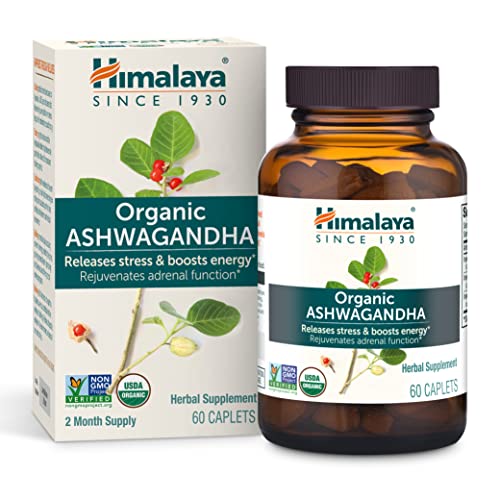
Supplement Facts
Serving Size: 2 Tablets
Serving Per Container: 60
Amount Per Serving
%DV
Thiamin (Vitamin B1 from Organic B Complex Blend)
0.6 mg
50%
Riboflavin (Vitamin B2 from Organic B Complex Blend)
0.65 mg
50%
Niacin (from Organic B Complex Blend)
1.2 mg
7%
Vitamin B6 (from Organic B Complex Blend)
0.85 mg
50%
Folate (from Organic B Complex Blend)
25 mcg DFE
6%
Pantothenic Acid (from Organic B Complex Blend)
0.8 mg
16%
Organic Adrenal Blend
850 mg
+
Organic Schisandra (Schisandra chinensis) Berry Extract
330 mg
Organic Rhodiola rosea Root Extract
300 mg
Organic Ashwagandha Root Extract (7.5 mg Withanolides)
150 mg
Organic Eleuthero (Siberian Ginseng) Root Extract
70 mg
Organic B Complex Blend
50 mg
+
Probiotic Blend
4 mg
+
Top Medical Research Studies
8
This experimental study investigated whether B vitamins could correct metabolic problems associated with thyroid dysfunction. Researchers induced hypothyroidism and hyperthyroidism in rats over 21 days, then examined how these conditions affected the methylation cycle—a key metabolic pathway dependent on vitamins B9, B12, and related compounds.
Hypothyroidism disrupted this cycle, reducing enzyme activity and raising homocysteine levels—a risk factor for heart disease. When the researchers treated hypothyroid rats with folic acid, vitamin B12, and pyridoxine, these B vitamins significantly lowered homocysteine levels, suggesting they may help prevent cardiovascular complications in people with hypothyroidism. Though conducted in animals, the findings indicate B vitamins warrant further investigation as a potential supportive treatment.
Hypothyroidism disrupted this cycle, reducing enzyme activity and raising homocysteine levels—a risk factor for heart disease. When the researchers treated hypothyroid rats with folic acid, vitamin B12, and pyridoxine, these B vitamins significantly lowered homocysteine levels, suggesting they may help prevent cardiovascular complications in people with hypothyroidism. Though conducted in animals, the findings indicate B vitamins warrant further investigation as a potential supportive treatment.
Read More
9
We investigated whether vitamin B12 could help repair adrenal gland damage caused by hypothyroidism in rats. Using four groups of rats—one healthy, one receiving only B12, one with induced hypothyroidism, and one with hypothyroidism plus B12—we measured hormone levels and examined gland tissue.
Hypothyroid rats showed elevated TSH and epinephrine, but low cortisol and B12 levels. When we added B12 to hypothyroid rats, their hormone levels normalized and their adrenal tissue damage reversed, returning to near-normal structure. This suggests vitamin B12 may help restore hormonal balance and protect gland integrity in hypothyroidism.
Hypothyroid rats showed elevated TSH and epinephrine, but low cortisol and B12 levels. When we added B12 to hypothyroid rats, their hormone levels normalized and their adrenal tissue damage reversed, returning to near-normal structure. This suggests vitamin B12 may help restore hormonal balance and protect gland integrity in hypothyroidism.
Read More
9
Folic acid restored cognitive function via oxidative stress reduction
Researchers explored whether folic acid could reverse cognitive problems caused by hypothyroidism using a rat model. Over seven weeks, hypothyroid rats received folic acid at varying doses while their learning and memory were tested using maze navigation and avoidance tasks.
Folic acid substantially improved cognitive performance, particularly at higher doses. The supplement reduced the time and distance rats needed to complete memory tasks. These cognitive gains appeared to work through two mechanisms: folic acid reduced harmful oxidative damage in the brain and regulated acetylcholinesterase activity, an enzyme crucial for memory function.
The findings suggest folic acid could be a promising natural approach to protecting brain function in hypothyroid patients experiencing memory loss.
Folic acid substantially improved cognitive performance, particularly at higher doses. The supplement reduced the time and distance rats needed to complete memory tasks. These cognitive gains appeared to work through two mechanisms: folic acid reduced harmful oxidative damage in the brain and regulated acetylcholinesterase activity, an enzyme crucial for memory function.
The findings suggest folic acid could be a promising natural approach to protecting brain function in hypothyroid patients experiencing memory loss.
Read More
Most Useful Reviews
9
Balances adrenal issues!
2 people found this helpful
I use this daily and find it helps wonders for the adrenal issues caused by my weak thyroid. I have hypothyroidism and find this greatly offsets that imbalance. I take it daily and won’t be without it.
Read More
9
Improved wellbeing!
7 people found this helpful
It worked for me. With hypothyroidism, my energy level was very low. After one week of taking these, I can feel a difference in my overall wellbeing. It truly works!
Read More


Medical Researches
SCIENTIFIC SCORE
Moderately Effective
Based on 5 Researches
8.4
- All Researches
9
We investigated whether vitamin B12 could help repair adrenal gland damage caused by hypothyroidism in rats. Using four groups of rats—one healthy, one receiving only B12, one with induced hypothyroidism, and one with hypothyroidism plus B12—we measured hormone levels and examined gland tissue.
Hypothyroid rats showed elevated TSH and epinephrine, but low cortisol and B12 levels. When we added B12 to hypothyroid rats, their hormone levels normalized and their adrenal tissue damage reversed, returning to near-normal structure. This suggests vitamin B12 may help restore hormonal balance and protect gland integrity in hypothyroidism.
Hypothyroid rats showed elevated TSH and epinephrine, but low cortisol and B12 levels. When we added B12 to hypothyroid rats, their hormone levels normalized and their adrenal tissue damage reversed, returning to near-normal structure. This suggests vitamin B12 may help restore hormonal balance and protect gland integrity in hypothyroidism.
Read More
9
Folic acid restored cognitive function via oxidative stress reduction
Researchers explored whether folic acid could reverse cognitive problems caused by hypothyroidism using a rat model. Over seven weeks, hypothyroid rats received folic acid at varying doses while their learning and memory were tested using maze navigation and avoidance tasks.
Folic acid substantially improved cognitive performance, particularly at higher doses. The supplement reduced the time and distance rats needed to complete memory tasks. These cognitive gains appeared to work through two mechanisms: folic acid reduced harmful oxidative damage in the brain and regulated acetylcholinesterase activity, an enzyme crucial for memory function.
The findings suggest folic acid could be a promising natural approach to protecting brain function in hypothyroid patients experiencing memory loss.
Folic acid substantially improved cognitive performance, particularly at higher doses. The supplement reduced the time and distance rats needed to complete memory tasks. These cognitive gains appeared to work through two mechanisms: folic acid reduced harmful oxidative damage in the brain and regulated acetylcholinesterase activity, an enzyme crucial for memory function.
The findings suggest folic acid could be a promising natural approach to protecting brain function in hypothyroid patients experiencing memory loss.
Read More
8
Thiamine improves hypothyroid-induced memory loss
A controlled experiment examined whether thiamine (Vitamin B1) could reverse memory problems caused by hypothyroidism in rats. Researchers treated hypothyroid rats with varying doses of thiamine over seven weeks, then tested their learning and memory using water maze and avoidance tests.
Thiamine significantly improved memory performance, particularly at higher doses. Rats receiving the supplement spent less time finding a platform location and showed better recall in avoidance tasks compared to untreated hypothyroid rats. Lab analysis revealed that thiamine reduced harmful oxidative damage in brain tissue while improving protective antioxidant levels and restoring normal acetylcholinesterase function.
The findings suggest thiamine supplementation may help restore memory loss in hypothyroidism by protecting brain cells from oxidative stress and restoring proper chemical signaling involved in learning and memory formation.
Thiamine significantly improved memory performance, particularly at higher doses. Rats receiving the supplement spent less time finding a platform location and showed better recall in avoidance tasks compared to untreated hypothyroid rats. Lab analysis revealed that thiamine reduced harmful oxidative damage in brain tissue while improving protective antioxidant levels and restoring normal acetylcholinesterase function.
The findings suggest thiamine supplementation may help restore memory loss in hypothyroidism by protecting brain cells from oxidative stress and restoring proper chemical signaling involved in learning and memory formation.
Read More
8
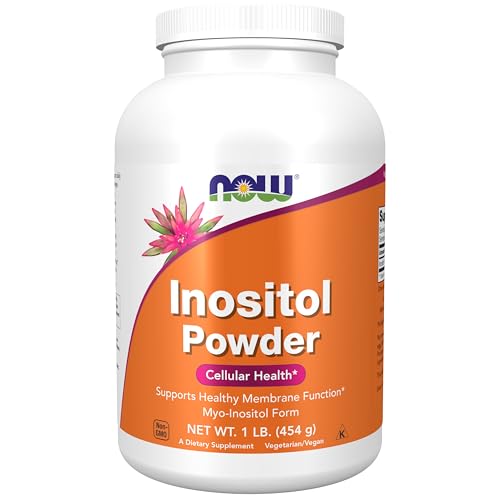
Selenium-myo-inositol combo improves thyroid protection
We examined whether combining selenium with myo-inositol could better protect thyroid function in people with Hashimoto's thyroiditis. In this observational study, patients either received no treatment, selenium alone (83 μg daily), or selenium plus myo-inositol (83 μg + 600 mg daily) for up to 12 months.
Untreated patients experienced rising TSH levels—a sign of declining thyroid function. However, selenium alone reduced TSH by 31%, while the combination treatment achieved a 38% reduction and worked faster. Both treated groups also showed improvements in thyroid structure on ultrasound, though the difference wasn't statistically significant.
Our findings suggest selenium effectively slows Hashimoto's progression, and adding myo-inositol may enhance this protection by achieving healthier thyroid hormone levels more quickly.
Untreated patients experienced rising TSH levels—a sign of declining thyroid function. However, selenium alone reduced TSH by 31%, while the combination treatment achieved a 38% reduction and worked faster. Both treated groups also showed improvements in thyroid structure on ultrasound, though the difference wasn't statistically significant.
Our findings suggest selenium effectively slows Hashimoto's progression, and adding myo-inositol may enhance this protection by achieving healthier thyroid hormone levels more quickly.
Read More
8
This experimental study investigated whether B vitamins could correct metabolic problems associated with thyroid dysfunction. Researchers induced hypothyroidism and hyperthyroidism in rats over 21 days, then examined how these conditions affected the methylation cycle—a key metabolic pathway dependent on vitamins B9, B12, and related compounds.
Hypothyroidism disrupted this cycle, reducing enzyme activity and raising homocysteine levels—a risk factor for heart disease. When the researchers treated hypothyroid rats with folic acid, vitamin B12, and pyridoxine, these B vitamins significantly lowered homocysteine levels, suggesting they may help prevent cardiovascular complications in people with hypothyroidism. Though conducted in animals, the findings indicate B vitamins warrant further investigation as a potential supportive treatment.
Hypothyroidism disrupted this cycle, reducing enzyme activity and raising homocysteine levels—a risk factor for heart disease. When the researchers treated hypothyroid rats with folic acid, vitamin B12, and pyridoxine, these B vitamins significantly lowered homocysteine levels, suggesting they may help prevent cardiovascular complications in people with hypothyroidism. Though conducted in animals, the findings indicate B vitamins warrant further investigation as a potential supportive treatment.
Read More
User Reviews
USERS' SCORE
Good
Based on 2 Reviews
8.6
- All Reviews
- Positive Reviews
- Negative Reviews
9
Balances adrenal issues!
2 people found this helpful
I use this daily and find it helps wonders for the adrenal issues caused by my weak thyroid. I have hypothyroidism and find this greatly offsets that imbalance. I take it daily and won’t be without it.
Read More
9
Improved wellbeing!
7 people found this helpful
It worked for me. With hypothyroidism, my energy level was very low. After one week of taking these, I can feel a difference in my overall wellbeing. It truly works!
Read More
Frequently Asked Questions
No FAQs are available for this product and symptom.
References
- Ajeel MT, Saleh HS, Din AM, Alashkham F, Said RM. Efficacy of vitamin B12 treatment on the adrenal gland of propylthiouracil-induced hypothyroid rats. Open Vet J. 2025;15:2395. 10.5455/OVJ.2025.v15.i6.12
- Saberi R, Mirazi N, Amirahmadi S, Darbandi ZK, Vafaee F, et al. Ameliorative effects of thiamin on learning behavior and memory dysfunction in a rat model of hypothyroidism: implication of oxidative stress and acetylcholinesterase. Metab Brain Dis. 2023;38:2603. 10.1007/s11011-023-01317-0
- Amirahmadi S, Hosseini M, Ahmadabady S, Akbarian M, Abrari K, et al. Folic acid attenuated learning and memory impairment via inhibition of oxidative damage and acetylcholinesterase activity in hypothyroid rats. Metab Brain Dis. 2021;36:2393. 10.1007/s11011-021-00815-3
- Pace C, Tumino D, Russo M, Le Moli R, Naselli A, et al. Role of selenium and myo-inositol supplementation on autoimmune thyroiditis progression. Endocr J. 2020;67:1093. 10.1507/endocrj.EJ20-0062
- Nechyporuk V, Korda M, Pentiuk L, Dmytrenko I, Bulko I. The impact of B vitamins on the functioning of methylation cycle in the liver and the kidneys of hyper- and hypothyroid rats. Pol Merkur Lekarski. 2020;48:55. PubMed

