Last update
8/12/2026
Reviewed By
Infographics
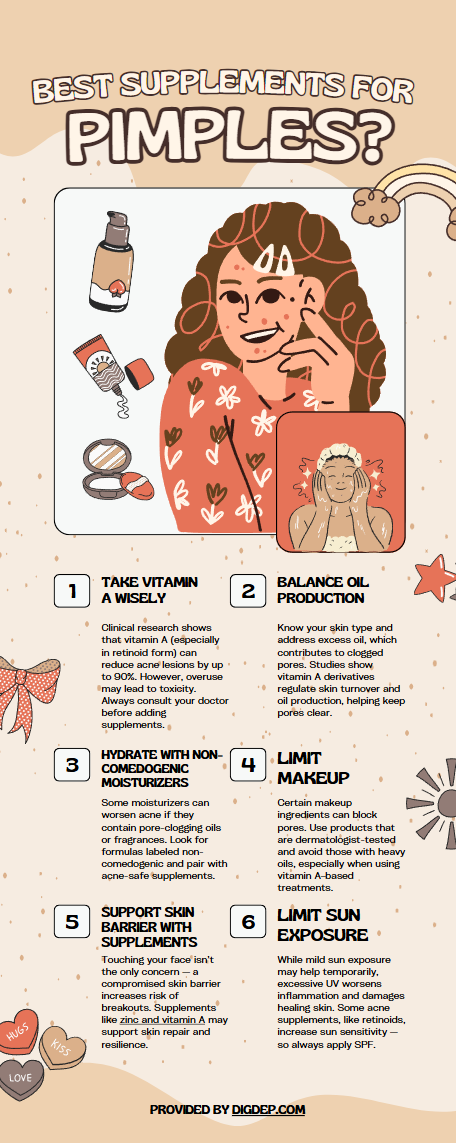
Overview

SCIENTIFIC SCORE
Possibly Effective
Based on 30 Researches
7.7
USERS' SCORE
Moderately Good
Based on 11 Reviews
7.2

Supplement Facts
Serving Size: 1 Softgel
Amount Per Serving
%DV
Vitamin A(60% as Beta-Carotene and 40% from Fish Liver Oil)
7,500 mcg
833%
Vitamin D3(as Cholecalciferol) (from Lanolin)
25 mcg (1,000 IU)
125%
Top Medical Research Studies
9.5
We explored how vitamin A can influence acne treatment, focusing on the effectiveness of its derivatives. According to the findings, oral isotretinoin, a form of vitamin A, showed remarkable efficacy. Patients experienced a significant reduction in lesions—up to 90%—with complete remission in one-quarter of those involved in the study.
Moreover, more than half of the participants reported substantial improvement after treatment. This strong performance suggests that vitamin A plays a key role in managing acne symptoms effectively.
Overall, the evidence we examined indicates that incorporating vitamin A, particularly through isotretinoin, can lead to significant improvements for individuals struggling with acne.
Moreover, more than half of the participants reported substantial improvement after treatment. This strong performance suggests that vitamin A plays a key role in managing acne symptoms effectively.
Overall, the evidence we examined indicates that incorporating vitamin A, particularly through isotretinoin, can lead to significant improvements for individuals struggling with acne.
Read More
9
We investigated the impact of vitamin A, specifically isotretinoin, on acne through its use in treating frontal fibrosing alopecia (FFA). Our exploration included a comprehensive review of the available research, focusing on its effectiveness in alleviating symptoms related to acne, especially in the context of hair loss and facial papules.
The analysis covered 15 relevant studies involving 232 FFA patients. Remarkably, nearly 90% of these individuals reported a significant reduction in symptoms after daily doses of 10-40 mg of isotretinoin. This indicates that vitamin A, in the form of isotretinoin, effectively addresses not only the physical manifestations of acne but also helps improve overall skin health.
Our findings suggest that isotretinoin holds promise as a treatment option, particularly for those struggling with the dual challenges of FFA and acne. While further research is warranted, the current evidence strongly supports its role in mitigating acne symptoms.
The analysis covered 15 relevant studies involving 232 FFA patients. Remarkably, nearly 90% of these individuals reported a significant reduction in symptoms after daily doses of 10-40 mg of isotretinoin. This indicates that vitamin A, in the form of isotretinoin, effectively addresses not only the physical manifestations of acne but also helps improve overall skin health.
Our findings suggest that isotretinoin holds promise as a treatment option, particularly for those struggling with the dual challenges of FFA and acne. While further research is warranted, the current evidence strongly supports its role in mitigating acne symptoms.
Read More
9
Tretinoin effective for acne; limited evidence elsewhere
We reviewed the latest evidence on topical tretinoin (a vitamin A derivative) across multiple skin conditions, drawing on studies published through July 2025. Strong data from randomized trials confirm tretinoin's proven benefit for acne and photoaging—two conditions where it performs particularly well.
Beyond acne, smaller studies suggest tretinoin may help with melasma, scars, and hair loss, though more rigorous testing is needed. Importantly, a large trial found tretinoin did not prevent skin cancer.
Side effects remain mild and localized, with no evidence of serious systemic harm, making it a generally safe option for treating acne and aging skin.
Beyond acne, smaller studies suggest tretinoin may help with melasma, scars, and hair loss, though more rigorous testing is needed. Importantly, a large trial found tretinoin did not prevent skin cancer.
Side effects remain mild and localized, with no evidence of serious systemic harm, making it a generally safe option for treating acne and aging skin.
Read More
Most Useful Reviews
8
Skin improvement
2 people found this helpful
Since I started taking this, my skin has become firmer and less prone to acne. My eyes no longer feel dry, and I think it has boosted my immunity, making it difficult for me to catch a cold. I really like it.
Read More
7
Decrease in Acne
1 people found this helpful
I switched from the non-Ultra version of Vitamin A & D to this alternative. The dermatologist confirmed the effectiveness of A&D, often recommended for pimples on the upper arm, and I continue its use. Although it has been a while since my switch, I've noticed a significant reduction in new Acne breakouts. I intend to keep using it, hoping for continued effectiveness.
Read More
8
Reduced acne
After taking this supplement, I found it harder to get acne. It seems to suit me well, so I will continue using it!
Read More


Medical Researches
SCIENTIFIC SCORE
Possibly Effective
Based on 30 Researches
7.7
- All Researches
9.5
Impact of Isotretinoin on Liver Function
We conducted a retrospective study to understand how vitamin A, particularly in the form of oral isotretinoin, impacts acne treatment. This powerful medication is often prescribed for severe cases of acne that don’t respond to other treatments.
Our research reviewed medical records of 50 patients aged between 13 and 40 years who received isotretinoin at Ibri Polyclinic from 2012 to 2022. Over the treatment period, we observed notable changes in liver function and lipid profiles among the patients.
Specifically, after treatment, there were increases in liver enzymes indicating changes in liver function, as well as fluctuations in cholesterol and triglyceride levels. These findings suggest potential risks associated with isotretinoin, highlighting the need for careful monitoring.
While isotretinoin does show effectiveness in treating severe acne, there’s an evident impact on liver health and lipid metabolism that we must consider when prescribing this medication. More research is necessary to fully unravel these effects and guide future treatments.
Our research reviewed medical records of 50 patients aged between 13 and 40 years who received isotretinoin at Ibri Polyclinic from 2012 to 2022. Over the treatment period, we observed notable changes in liver function and lipid profiles among the patients.
Specifically, after treatment, there were increases in liver enzymes indicating changes in liver function, as well as fluctuations in cholesterol and triglyceride levels. These findings suggest potential risks associated with isotretinoin, highlighting the need for careful monitoring.
While isotretinoin does show effectiveness in treating severe acne, there’s an evident impact on liver health and lipid metabolism that we must consider when prescribing this medication. More research is necessary to fully unravel these effects and guide future treatments.
Read More
9.5
We explored how vitamin A can influence acne treatment, focusing on the effectiveness of its derivatives. According to the findings, oral isotretinoin, a form of vitamin A, showed remarkable efficacy. Patients experienced a significant reduction in lesions—up to 90%—with complete remission in one-quarter of those involved in the study.
Moreover, more than half of the participants reported substantial improvement after treatment. This strong performance suggests that vitamin A plays a key role in managing acne symptoms effectively.
Overall, the evidence we examined indicates that incorporating vitamin A, particularly through isotretinoin, can lead to significant improvements for individuals struggling with acne.
Moreover, more than half of the participants reported substantial improvement after treatment. This strong performance suggests that vitamin A plays a key role in managing acne symptoms effectively.
Overall, the evidence we examined indicates that incorporating vitamin A, particularly through isotretinoin, can lead to significant improvements for individuals struggling with acne.
Read More
9
Low-dose isotretinoin effectively treats moderate acne
We explored whether a lower dose of isotretinoin could effectively treat moderate acne while minimizing side effects. In a 3-month prospective study, 50 patients received 20 mg daily (about 0.3-0.4 mg/kg)—roughly one-third the standard dose—with follow-up tracking for up to 4 years.
The results were encouraging: roughly 90% of both younger (ages 12-20) and older (ages 21-35) patients showed significant improvement. Side effects were minimal, with only 4-5% of patients experiencing elevated lipid levels or liver changes. During the 2-year follow-up, relapses occurred in fewer than 6% of patients. Low-dose isotretinoin proved effective for moderate acne at reduced cost and side-effect risk compared to higher doses.
The results were encouraging: roughly 90% of both younger (ages 12-20) and older (ages 21-35) patients showed significant improvement. Side effects were minimal, with only 4-5% of patients experiencing elevated lipid levels or liver changes. During the 2-year follow-up, relapses occurred in fewer than 6% of patients. Low-dose isotretinoin proved effective for moderate acne at reduced cost and side-effect risk compared to higher doses.
Read More
9
We explored the effectiveness of retinoic acid, commonly known as vitamin A, for acne treatment using a unique delivery method that combines proliposomes and nanofibers. The goal was to assess how these specially formulated nanofibers, loaded with retinoic acid, could inhibit microbial biofilm formation, a common contributor to acne.
In our study, we created various formulations of blank and retinoic acid-loaded proliposomal nanofibers. By using different ratios of polyvinylpyrrolidone, phosphatidylcholine, and cholesterol, we aimed to optimize the delivery system. Our findings showed that these formulations were able to form liposomes rapidly after hydration and had appropriate characteristics such as vesicle size and stability.
Notably, the ATRA (all-trans retinoic acid) loaded nanofibers demonstrated greater bioadhesion than a commercial cream, suggesting they may adhere better to the skin. The results indicated these nanofibers offered superior antibacterial and anti-biofilm effects compared to retinoic acid alone. This suggests that this innovative delivery method could enhance the effectiveness of vitamin A in acne treatment.
Overall, the study highlights the promising potential of combining nanofibers and liposomes to improve acne treatment outcomes, showing that vitamin A can be more effective when delivered using this advanced method.
In our study, we created various formulations of blank and retinoic acid-loaded proliposomal nanofibers. By using different ratios of polyvinylpyrrolidone, phosphatidylcholine, and cholesterol, we aimed to optimize the delivery system. Our findings showed that these formulations were able to form liposomes rapidly after hydration and had appropriate characteristics such as vesicle size and stability.
Notably, the ATRA (all-trans retinoic acid) loaded nanofibers demonstrated greater bioadhesion than a commercial cream, suggesting they may adhere better to the skin. The results indicated these nanofibers offered superior antibacterial and anti-biofilm effects compared to retinoic acid alone. This suggests that this innovative delivery method could enhance the effectiveness of vitamin A in acne treatment.
Overall, the study highlights the promising potential of combining nanofibers and liposomes to improve acne treatment outcomes, showing that vitamin A can be more effective when delivered using this advanced method.
Read More
9
We investigated the impact of vitamin A, specifically isotretinoin, on acne through its use in treating frontal fibrosing alopecia (FFA). Our exploration included a comprehensive review of the available research, focusing on its effectiveness in alleviating symptoms related to acne, especially in the context of hair loss and facial papules.
The analysis covered 15 relevant studies involving 232 FFA patients. Remarkably, nearly 90% of these individuals reported a significant reduction in symptoms after daily doses of 10-40 mg of isotretinoin. This indicates that vitamin A, in the form of isotretinoin, effectively addresses not only the physical manifestations of acne but also helps improve overall skin health.
Our findings suggest that isotretinoin holds promise as a treatment option, particularly for those struggling with the dual challenges of FFA and acne. While further research is warranted, the current evidence strongly supports its role in mitigating acne symptoms.
The analysis covered 15 relevant studies involving 232 FFA patients. Remarkably, nearly 90% of these individuals reported a significant reduction in symptoms after daily doses of 10-40 mg of isotretinoin. This indicates that vitamin A, in the form of isotretinoin, effectively addresses not only the physical manifestations of acne but also helps improve overall skin health.
Our findings suggest that isotretinoin holds promise as a treatment option, particularly for those struggling with the dual challenges of FFA and acne. While further research is warranted, the current evidence strongly supports its role in mitigating acne symptoms.
Read More
User Reviews
USERS' SCORE
Moderately Good
Based on 11 Reviews
7.2
- All Reviews
- Positive Reviews
- Negative Reviews
8
Skin improvement
2 people found this helpful
Since I started taking this, my skin has become firmer and less prone to acne. My eyes no longer feel dry, and I think it has boosted my immunity, making it difficult for me to catch a cold. I really like it.
Read More
7
Decrease in Acne
1 people found this helpful
I switched from the non-Ultra version of Vitamin A & D to this alternative. The dermatologist confirmed the effectiveness of A&D, often recommended for pimples on the upper arm, and I continue its use. Although it has been a while since my switch, I've noticed a significant reduction in new Acne breakouts. I intend to keep using it, hoping for continued effectiveness.
Read More
8
Reduced acne
After taking this supplement, I found it harder to get acne. It seems to suit me well, so I will continue using it!
Read More
7
Effective for Acne
I've had many pimples on my face, so I previously used this product with noticeable results. I have oily skin and seborrheic scalp, but I am seeing improvements once again after using this product. However, I don't believe long-term use is advisable, so I plan to take a six-month break after finishing the bottle.
Read More
7
Less rashes
I liked this product from NOW Foods. The package contains 100 capsules, enough for 3.5 months at one capsule per day. My son took it for his acne, and alongside other treatments, his rashes have decreased. The quality is excellent.
Read More
Frequently Asked Questions
8
Skin improvement
2 people found this helpful
Since I started taking this, my skin has become firmer and less prone to acne. My eyes no longer feel dry, and I think it has boosted my immunity, making it difficult for me to catch a cold. I really like it.
7
Less rashes
I liked this product from NOW Foods. The package contains 100 capsules, enough for 3.5 months at one capsule per day. My son took it for his acne, and alongside other treatments, his rashes have decreased. The quality is excellent.
5
Minor improvement
I purchased this for my son who has acne. It helped a bit but didn’t clear his skin completely; however, it did strengthen his immune system. The pills are small, and the quality overall is excellent. I would highly recommend it.
8
Reduced acne
After taking this supplement, I found it harder to get acne. It seems to suit me well, so I will continue using it!
7
Reduced redness
This is the best value for money. I used it for my child's acne, taking one tablet every two days alongside biotin, which has greatly reduced the redness.
7
Effective for acne
I can always tell when I’ve been slack with this supplement. It particularly helps with adult and hormonal acne, especially if you have thyroid issues.
9.5
We explored how vitamin A can influence acne treatment, focusing on the effectiveness of its derivatives. According to the findings, oral isotretinoin, a form of vitamin A, showed remarkable efficacy. Patients experienced a significant reduction in lesions—up to 90%—with complete remission in one-quarter of those involved in the study.
Moreover, more than half of the participants reported substantial improvement after treatment. This strong performance suggests that vitamin A plays a key role in managing acne symptoms effectively.
Overall, the evidence we examined indicates that incorporating vitamin A, particularly through isotretinoin, can lead to significant improvements for individuals struggling with acne.
Moreover, more than half of the participants reported substantial improvement after treatment. This strong performance suggests that vitamin A plays a key role in managing acne symptoms effectively.
Overall, the evidence we examined indicates that incorporating vitamin A, particularly through isotretinoin, can lead to significant improvements for individuals struggling with acne.
9.5
Impact of Isotretinoin on Liver Function
We conducted a retrospective study to understand how vitamin A, particularly in the form of oral isotretinoin, impacts acne treatment. This powerful medication is often prescribed for severe cases of acne that don’t respond to other treatments.
Our research reviewed medical records of 50 patients aged between 13 and 40 years who received isotretinoin at Ibri Polyclinic from 2012 to 2022. Over the treatment period, we observed notable changes in liver function and lipid profiles among the patients.
Specifically, after treatment, there were increases in liver enzymes indicating changes in liver function, as well as fluctuations in cholesterol and triglyceride levels. These findings suggest potential risks associated with isotretinoin, highlighting the need for careful monitoring.
While isotretinoin does show effectiveness in treating severe acne, there’s an evident impact on liver health and lipid metabolism that we must consider when prescribing this medication. More research is necessary to fully unravel these effects and guide future treatments.
Our research reviewed medical records of 50 patients aged between 13 and 40 years who received isotretinoin at Ibri Polyclinic from 2012 to 2022. Over the treatment period, we observed notable changes in liver function and lipid profiles among the patients.
Specifically, after treatment, there were increases in liver enzymes indicating changes in liver function, as well as fluctuations in cholesterol and triglyceride levels. These findings suggest potential risks associated with isotretinoin, highlighting the need for careful monitoring.
While isotretinoin does show effectiveness in treating severe acne, there’s an evident impact on liver health and lipid metabolism that we must consider when prescribing this medication. More research is necessary to fully unravel these effects and guide future treatments.
9
We explored the effectiveness of retinoic acid, commonly known as vitamin A, for acne treatment using a unique delivery method that combines proliposomes and nanofibers. The goal was to assess how these specially formulated nanofibers, loaded with retinoic acid, could inhibit microbial biofilm formation, a common contributor to acne.
In our study, we created various formulations of blank and retinoic acid-loaded proliposomal nanofibers. By using different ratios of polyvinylpyrrolidone, phosphatidylcholine, and cholesterol, we aimed to optimize the delivery system. Our findings showed that these formulations were able to form liposomes rapidly after hydration and had appropriate characteristics such as vesicle size and stability.
Notably, the ATRA (all-trans retinoic acid) loaded nanofibers demonstrated greater bioadhesion than a commercial cream, suggesting they may adhere better to the skin. The results indicated these nanofibers offered superior antibacterial and anti-biofilm effects compared to retinoic acid alone. This suggests that this innovative delivery method could enhance the effectiveness of vitamin A in acne treatment.
Overall, the study highlights the promising potential of combining nanofibers and liposomes to improve acne treatment outcomes, showing that vitamin A can be more effective when delivered using this advanced method.
In our study, we created various formulations of blank and retinoic acid-loaded proliposomal nanofibers. By using different ratios of polyvinylpyrrolidone, phosphatidylcholine, and cholesterol, we aimed to optimize the delivery system. Our findings showed that these formulations were able to form liposomes rapidly after hydration and had appropriate characteristics such as vesicle size and stability.
Notably, the ATRA (all-trans retinoic acid) loaded nanofibers demonstrated greater bioadhesion than a commercial cream, suggesting they may adhere better to the skin. The results indicated these nanofibers offered superior antibacterial and anti-biofilm effects compared to retinoic acid alone. This suggests that this innovative delivery method could enhance the effectiveness of vitamin A in acne treatment.
Overall, the study highlights the promising potential of combining nanofibers and liposomes to improve acne treatment outcomes, showing that vitamin A can be more effective when delivered using this advanced method.
7
We investigated how vitamin A, in the form of retinoic acid (RA), impacts acne treatment when combined with other agents. The study utilized innovative liposomes that encapsulate both proteinase K and RA alongside soyaethyl morpholinium ethosulfate (SME), aiming for a dual action against acne by targeting both bacterial infection and inflammation.
Our findings showed that these multifunctional liposomes not only demonstrated significant antimicrobial effects, reducing bacterial colonies by 62%, but also effectively restrained the hyperproliferation of keratinocytes, the skin cells that can contribute to acne development. Unlike free forms of RA, which could enhance skin irritation, the liposomal version proved to have better skin tolerability.
Additionally, we noted that RA-loaded nanovesicles outperformed traditional free RA in improving skin barrier function. Overall, this study provides promising evidence that using RA within these specialized liposomes could potentially revolutionize acne treatments by effectively managing both the causes and symptoms of this condition.
Our findings showed that these multifunctional liposomes not only demonstrated significant antimicrobial effects, reducing bacterial colonies by 62%, but also effectively restrained the hyperproliferation of keratinocytes, the skin cells that can contribute to acne development. Unlike free forms of RA, which could enhance skin irritation, the liposomal version proved to have better skin tolerability.
Additionally, we noted that RA-loaded nanovesicles outperformed traditional free RA in improving skin barrier function. Overall, this study provides promising evidence that using RA within these specialized liposomes could potentially revolutionize acne treatments by effectively managing both the causes and symptoms of this condition.
7
We analyzed how oral isotretinoin, a vitamin A derivative, impacts acne treatment and ocular health. This study included 489 participants from the Jazan region, where we used an online questionnaire to gather data on symptoms experienced during isotretinoin therapy.
As we learned, many participants faced issues such as dry eyes and blurry vision, which are known side effects of the treatment. Over half of current users reported severe ocular symptoms, highlighting the importance of monitoring eye health for those undergoing this acne treatment.
Notably, individuals who used contact lenses or were on higher doses of isotretinoin experienced worse symptoms. These findings remind us of the necessity to assess individual risk factors before starting treatment. Overall, while vitamin A in isotretinoin effectively addresses acne, it also brings potential ocular concerns that should not be overlooked.
As we learned, many participants faced issues such as dry eyes and blurry vision, which are known side effects of the treatment. Over half of current users reported severe ocular symptoms, highlighting the importance of monitoring eye health for those undergoing this acne treatment.
Notably, individuals who used contact lenses or were on higher doses of isotretinoin experienced worse symptoms. These findings remind us of the necessity to assess individual risk factors before starting treatment. Overall, while vitamin A in isotretinoin effectively addresses acne, it also brings potential ocular concerns that should not be overlooked.
References
- Kotori MG. Low-dose Vitamin "A" Tablets-treatment of Acne Vulgaris. Med Arch. 2015;69:28. 10.5455/medarh.2015.69.28-30
- Kharfi M, Tekaya N, Zeglaoui F, Ezzine N, Mokhtar I, et al. [Comparative study of the efficacy and tolerance of 12% glycolic acid cream and 0.05% retinoic acid cream for polymorphic acne]. Tunis Med. 2001;79:374. PubMed
- Swain R, Kaplan B. Vitamins as therapy in the 1990s. J Am Board Fam Pract. 1995;8:206. PubMed
- Abuallut II, Dibaji MQ, Assiri A, Mawkili W, Najmi AY, et al. Oral Isotretinoin-Associated Ocular Effects and Risk Factors: A Cross-Sectional Study. Clin Ophthalmol. 2024;18:4041. 10.2147/OPTH.S491757
- Yaqoubi WSAA, Touby SSJA, Hossain MA. Laboratory investigations of liver function and lipid profiles tests before and after oral isotretinoin treatment among Acne valgaris clients at Ibri Polyclinic: A retrospective study. Toxicol Rep. 2024;13:101799. 10.1016/j.toxrep.2024.101799
- Tort S, Öztürk ZC, Kaynak-Onurdağ F, Mutlu-Ağardan NB. Preparation and evaluation the effects of retinoic acid loaded proliposomal nanofibers on microbial biofilm inhibition. Pharm Dev Technol. 2024;29:955. 10.1080/10837450.2024.2411034
- Kulaklı S, Elmas Telli AC, Sarı İF, Oğuz ID, Kulaklı F. Increased femoral cartilage thickness in acne patients using isotretinoin: could it be a sign of early osteoarthritis?. Arch Dermatol Res. 2024;316:512. 10.1007/s00403-024-03264-x
- Powała K, Żołek T, Brown G, Kutner A. Molecular Interactions of Selective Agonists and Antagonists with the Retinoic Acid Receptor γ. Int J Mol Sci. 2024;25. 10.3390/ijms25126568
- Hussein RS, Dayel SB, Abahussein O. Prospective study of the effects of isotretinoin and vitamin D levels on severe acne vulgaris. Turk J Med Sci. 2023;53:1732. 10.55730/1300-0144.5742
- Algarin YA, Pulumati A, Jaalouk D, Tan J, Nouri K. The role of vitamins and nutrients in rosacea. Arch Dermatol Res. 2024;316:142. 10.1007/s00403-024-02895-4
- Shahpar A, Nezhad NZ, Sahaf AS, Ahramiyanpour N. A review of isotretinoin in the treatment of frontal fibrosing alopecia. J Cosmet Dermatol. 2024;23:1956. 10.1111/jocd.16245
- Demir EY, Köse ÖK. Effects of oral isotretinoin treatment for acne vulgaris patients on anger responses and the relationship with temperament. Rev Assoc Med Bras (1992). 2023;70:e20230592. 10.1590/1806-9282.20230592
- Cao J, Xu M, Zhu L, Xiao S. Viaminate Inhibits Acnes-induced Abnormal Proliferation and Keratinization of HaCat Cells by Regulating the S100A8/S100A9- MAPK Cascade. Curr Drug Targets. 2023;24:1055. 10.2174/0113894501243867230928115205
- Tsai MJ, Lin CY, Trousil J, Sung CT, Lee MH, et al. Proteinase K/Retinoic Acid-Loaded Cationic Liposomes as Multifunctional Anti-Acne Therapy to Disorganize Biofilm and Regulate Keratinocyte Proliferation. Int J Nanomedicine. 2023;18:3879. 10.2147/IJN.S416966
- Gurel A, Gurel G, Fırat F, Ozgul E, Turkoglu IND, et al. Effect of systemic isotretinoin therapy on semen parameters. Ann Med. 2023;55:2207038. 10.1080/07853890.2023.2207038
- Cook MK, Perche PO, Feldman SR. The use of oral vitamin A in acne management: a review. Dermatol Online J. 2022;28. 10.5070/D328559239
- Cao J, Xu M, Zhu L, Xiao S. Viaminate ameliorates Propionibacterium acnes-induced acne via inhibition of the TLR2/NF-κB and MAPK pathways in rats. Naunyn Schmiedebergs Arch Pharmacol. 2023;396:1487. 10.1007/s00210-022-02379-0
- Kontzias C, Zaino M, Feldman SR. Tretinoin 0.1% and Benzoyl Peroxide 3% Cream for the Treatment of Facial Acne Vulgaris. Ann Pharmacother. 2023;57:1088. 10.1177/10600280221147338
- Kosmoski G, Miller D, Coret C, Atillasoy E. A Topical Combination Regimen of Benzoyl Peroxide and Retinol Moisturizer for Mild to Moderate Acne. J Drugs Dermatol. 2022;21:1340. 10.36849/JDD.6845
- Balado-Simó P, Morgado-Carrasco D, Gómez-Armayones S, López-Ferrer A, Barco D, et al. An Updated Review of Topical Tretinoin in Dermatology: From Acne and Photoaging to Skin Cancer. J Clin Med. 2025;14. 10.3390/jcm14227958
- Dahlan NH, Sitohang IBS, Indriatmi W, Wibowo H, Enggy LE. Correlation Between Reduced IL-1β Levels in Acne Lesions and the Decrease in Acne Inflammatory Lesions Following Topical Vitamin D Administration: A Double-Blind Randomized Controlled Trial. Clin Cosmet Investig Dermatol. 2024;17:2183. 10.2147/CCID.S475068
- Singh A, Dorjay K, Sinha S, Chitkara A. The interplay of vitamin D and body mass index in acne patients vs. controls. J Cosmet Dermatol. 2021;20:3689. 10.1111/jocd.14034
- Ramanan EA, Ravi S, Anbu KRR, Michael M. Efficacy and Safety of Tracnil™ Administration in Patients with Dermatological Manifestations of PCOS: An Open-Label Single-Arm Study. Dermatol Res Pract. 2020;2020:7019126. 10.1155/2020/7019126
- Abd-Elmaged WM, Nada EA, Hassan MH, Elsadek BEM, Abdelrahim EA, et al. Lesional and circulating levels of interleukin-17 and 25-hydroxycholecalciferol in active acne vulgaris: Correlation to disease severity. J Cosmet Dermatol. 2019;18:671. 10.1111/jocd.12715
- Sardana K, Verma G. and the Th1/Th17 Axis, Implications in Acne Pathogenesis and Treatment. Indian J Dermatol. 2017;62:392. 10.4103/ijd.IJD_483_16
- Zouboulis CC, Seltmann H, Abdel-Naser MB, Hossini AM, Menon GK, et al. Effects of Extracellular Calcium and 1,25 dihydroxyvitamin D3 on Sebaceous Gland Cells In vitro and In vivo. Acta Derm Venereol. 2017;97:313. 10.2340/00015555-2525
- Lim SK, Ha JM, Lee YH, Lee Y, Seo YJ, et al. Comparison of Vitamin D Levels in Patients with and without Acne: A Case-Control Study Combined with a Randomized Controlled Trial. PLoS One. 2016;11:e0161162. 10.1371/journal.pone.0161162
- Nieves NJ, Ahrens JM, Plum LA, DeLuca HF, Clagett-Dame M. Identification of a unique subset of 2-methylene-19-nor analogs of vitamin D with comedolytic activity in the rhino mouse. J Invest Dermatol. 2010;130:2359. 10.1038/jid.2010.142
- Reichrath J. Vitamin D and the skin: an ancient friend, revisited. Exp Dermatol. 2007;16:618. PubMed
- Hayashi N, Watanabe H, Yasukawa H, Uratsuji H, Kanazawa H, et al. Comedolytic effect of topically applied active vitamin D3 analogue on pseudocomedones in the rhino mouse. Br J Dermatol. 2006;155:895. PubMed

