Last update
7/6/2026
Reviewed By
Overview
SCIENTIFIC SCORE
Possibly Effective
Based on 28 Researches
7.9
USERS' SCORE
Good
Based on 2 Reviews
8.3

Supplement Facts
Serving Size: One (1) Capsule
Amount Per Serving
%DV
Calories
0
Total Carbohydrate
0 g
0%+
Total Sugars
0 g
**
Incl. 0 g Added Sugars
0%+
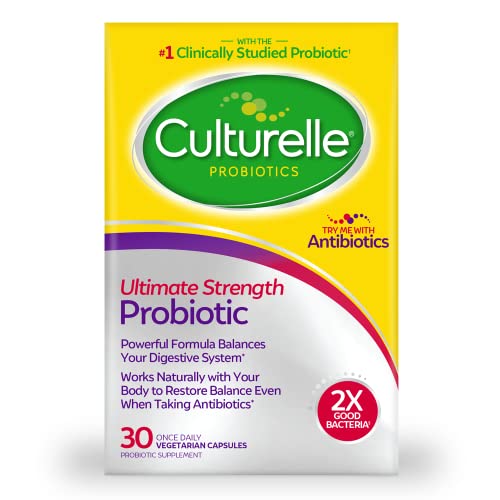
Lactobacillus rhamnosus GG
83 mg (20 billion CFUs)
**
Inulin (Chicory root extract)
200 mg
**
Top Medical Research Studies
9
We explored how Lactobacillus rhamnosus DNA might affect allergic responses linked to Th2 polarization. Using a specific protocol in mice, we administered LR-DNA daily for five days and observed its impact on intestinal cells. The results showed that LR-DNA increased PD-L1 expression in these cells, which then helped trigger the death of Th2 cells.
Importantly, while we found promising effects, the study suggests that just the DNA from the probiotic—not the live bacteria—was effective in reducing allergic responses.
Importantly, while we found promising effects, the study suggests that just the DNA from the probiotic—not the live bacteria—was effective in reducing allergic responses.
Read More
9
Lr improves lung inflammation management
We sought to understand how Lactobacillus rhamnosus (Lr) influences lung inflammation and gut health in asthma-COPD overlap syndrome (ACOS). In an experimental study with mice, we introduced Lr treatment after inducing ACOS.
Our findings indicated that Lr treatment reduced lung inflammation, bronchial hyperreactivity, and improved gut microbiota diversity. Specifically, Lr lowered the levels of pro-inflammatory cytokines and restored beneficial immune markers. This study reveals that Lr could play a role in managing symptoms of ACOS by modulating both lung inflammation and gut dysbiosis.
Our findings indicated that Lr treatment reduced lung inflammation, bronchial hyperreactivity, and improved gut microbiota diversity. Specifically, Lr lowered the levels of pro-inflammatory cytokines and restored beneficial immune markers. This study reveals that Lr could play a role in managing symptoms of ACOS by modulating both lung inflammation and gut dysbiosis.
Read More
9
Lactobacillus rhamnosus mitigates airway inflammation
We explored the effect of Lactobacillus rhamnosus 76 (LR76) on mice suffering from allergies triggered by ovalbumin.
In our study, LR76 helped reduce signs of airway inflammation and improved mucus secretion by affecting certain pathways involved in immune response.
Mice that received LR76 showed a decrease in multiple inflammatory markers, indicating a potential benefit of this probiotic on allergy-related symptoms. However, while promising, we must note that this study was conducted in animals, and results may differ in humans.
In our study, LR76 helped reduce signs of airway inflammation and improved mucus secretion by affecting certain pathways involved in immune response.
Mice that received LR76 showed a decrease in multiple inflammatory markers, indicating a potential benefit of this probiotic on allergy-related symptoms. However, while promising, we must note that this study was conducted in animals, and results may differ in humans.
Read More
Most Useful Reviews
7.5
Milk allergy relief
Very good probiotic for patients with milk allergies, as advised by my doctor.
Read More
7.5
Skin allergy aid
This has been quite helpful for my skin allergies; it’s excellent stuff.
Read More


Medical Researches
SCIENTIFIC SCORE
Possibly Effective
Based on 28 Researches
7.9
- All Researches
9
We explored how Lactobacillus rhamnosus DNA might affect allergic responses linked to Th2 polarization. Using a specific protocol in mice, we administered LR-DNA daily for five days and observed its impact on intestinal cells. The results showed that LR-DNA increased PD-L1 expression in these cells, which then helped trigger the death of Th2 cells.
Importantly, while we found promising effects, the study suggests that just the DNA from the probiotic—not the live bacteria—was effective in reducing allergic responses.
Importantly, while we found promising effects, the study suggests that just the DNA from the probiotic—not the live bacteria—was effective in reducing allergic responses.
Read More
9
We examined how probiotics, especially Lactobacillus rhamnosus, can improve treatments for food allergies through allergen-specific immunotherapy (FA-AIT). These helpful bacteria promote better immune responses, leading to increased tolerance. Clinical trials revealed that combining Lactobacillus rhamnosus with peanut immunotherapy led to better desensitization rates and positive immune changes.
While FA-AIT remains under study, integrating probiotics into these treatments appears promising for achieving lasting relief from allergies and improving patient well-being.
While FA-AIT remains under study, integrating probiotics into these treatments appears promising for achieving lasting relief from allergies and improving patient well-being.
Read More
9
Lr improves lung inflammation management
We sought to understand how Lactobacillus rhamnosus (Lr) influences lung inflammation and gut health in asthma-COPD overlap syndrome (ACOS). In an experimental study with mice, we introduced Lr treatment after inducing ACOS.
Our findings indicated that Lr treatment reduced lung inflammation, bronchial hyperreactivity, and improved gut microbiota diversity. Specifically, Lr lowered the levels of pro-inflammatory cytokines and restored beneficial immune markers. This study reveals that Lr could play a role in managing symptoms of ACOS by modulating both lung inflammation and gut dysbiosis.
Our findings indicated that Lr treatment reduced lung inflammation, bronchial hyperreactivity, and improved gut microbiota diversity. Specifically, Lr lowered the levels of pro-inflammatory cytokines and restored beneficial immune markers. This study reveals that Lr could play a role in managing symptoms of ACOS by modulating both lung inflammation and gut dysbiosis.
Read More
9
Lactobacillus rhamnosus mitigates airway inflammation
We explored the effect of Lactobacillus rhamnosus 76 (LR76) on mice suffering from allergies triggered by ovalbumin.
In our study, LR76 helped reduce signs of airway inflammation and improved mucus secretion by affecting certain pathways involved in immune response.
Mice that received LR76 showed a decrease in multiple inflammatory markers, indicating a potential benefit of this probiotic on allergy-related symptoms. However, while promising, we must note that this study was conducted in animals, and results may differ in humans.
In our study, LR76 helped reduce signs of airway inflammation and improved mucus secretion by affecting certain pathways involved in immune response.
Mice that received LR76 showed a decrease in multiple inflammatory markers, indicating a potential benefit of this probiotic on allergy-related symptoms. However, while promising, we must note that this study was conducted in animals, and results may differ in humans.
Read More
9
We assessed the impact of a combined probiotic, including Lactobacillus rhamnosus, on children with food allergies. In a study involving 92 children aged 4 to 5 years, half received the probiotic for 21 days while the control group did not.
Results showed a significant reduction in skin and gastrointestinal symptoms in those using the probiotic, alongside decreased levels of the allergy marker IgE. Although some symptoms returned over time, the overall severity remained lower than at the start.
Our findings suggest that this probiotic could improve allergy symptoms, supporting its potential as a treatment option for children.
Results showed a significant reduction in skin and gastrointestinal symptoms in those using the probiotic, alongside decreased levels of the allergy marker IgE. Although some symptoms returned over time, the overall severity remained lower than at the start.
Our findings suggest that this probiotic could improve allergy symptoms, supporting its potential as a treatment option for children.
Read More
User Reviews
USERS' SCORE
Good
Based on 2 Reviews
8.3
- All Reviews
- Positive Reviews
- Negative Reviews
7.5
Milk allergy relief
Very good probiotic for patients with milk allergies, as advised by my doctor.
Read More
7.5
Skin allergy aid
This has been quite helpful for my skin allergies; it’s excellent stuff.
Read More
Frequently Asked Questions
No FAQs are available for this product and symptom.
References
- Xu H, Duan X, Wang Y, Geng W. Amelioration Effect of ZW3 on Ovalbumin-Induced Allergic Symptoms in BALB/c Mice. Foods. 2024;14. 10.3390/foods14010016
- Lungaro L, Malfa P, Manza F, Costanzini A, Valentini G, et al. Clinical Efficacy of Probiotics for Allergic Rhinitis: Results of an Exploratory Randomized Controlled Trial. Nutrients. 2024;16. 10.3390/nu16234173
- Song S, Zhang H, Liu L, Li M, Wang X, et al. Probiotic DNA regulates intestinal Th2 polarization by inducing epithelial cells to produce PD-L1. Apoptosis. 2025;30:239. 10.1007/s10495-024-02043-3
- Mennini M, Piccirillo M, Furio S, Valitutti F, Ferretti A, et al. Probiotics and other adjuvants in allergen-specific immunotherapy for food allergy: a comprehensive review. Front Allergy. 2024;5:1473352. 10.3389/falgy.2024.1473352
- Malekiantaghi A, Ghanaati F, Shabani-Mirzaee H, Shariat M, Mojtahedi SY, et al. Helps to Reduce the Duration of Bleeding in Breastfed Infants with Allergic Proctocolitis. Breastfeed Med. 2025;20:59. 10.1089/bfm.2024.0185
- Xue J, Liu Z, Xie B, Dong R, Wu J, et al. Probiotic nucleotides increase IL-10 expression in airway macrophages to mitigate airway allergy. Inflamm Res. 2024;73:1919. 10.1007/s00011-024-01940-2
- Puisto R, Gómez-Gallego C, Collado MC, Turta O, Isolauri E, et al. The Role of Infant Gut Microbiota Modulation by Perinatal Maternal Probiotic Intervention in Atopic Eczema Risk Reduction. Neonatology. 2025;122:84. 10.1159/000540075
- Uberos J, Garcia-Cuesta A, Carrasco-Solis M, Ruiz-López A, Fernandez-Marı N E, et al. Lacticaseibacillus rhamnosus and breastmilk are associated with a decreased risk of atopic dermatitis in very low birth weight premature infants. Benef Microbes. 2023;14:433. 10.1163/18762891-20220144
- Shi J, Dong P, Liu C, Xu Y, Zheng M, et al. Probio-M9 alleviates OVA-sensitized food allergy through modulating gut microbiota and its metabolism. Food Funct. 2023;14:10784. 10.1039/d3fo03321j
- Li L, Wen X, Gong Y, Chen Y, Xu J, et al. HMGN2 and Histone H1.2: potential targets of a novel probiotic mixture for seasonal allergic rhinitis. Front Microbiol. 2023;14:1202858. 10.3389/fmicb.2023.1202858
- Vasconcelos JA, Mota AS, Olímpio F, Rosa PC, Damaceno-Rodrigues N, et al. Lactobacillus rhamnosus Modulates Lung Inflammation and Mitigates Gut Dysbiosis in a Murine Model of Asthma-COPD Overlap Syndrome. Probiotics Antimicrob Proteins. 2025;17:588. 10.1007/s12602-023-10167-2
- Tan Lim CSC, Sajo MEJV, Orteza KEMP, Fernandez PBA, Vila MJC. Next-Gen biotherapeutics: A systematic review and network meta-analysis on postbiotics as treatment for pediatric atopic dermatitis. Pediatr Allergy Immunol. 2023;34:e14022. 10.1111/pai.14022
- Komulainen M, Saros L, Vahlberg T, Nermes M, Jartti T, et al. Maternal fish oil and/or probiotics intervention: Allergic diseases in children up to two years old. Pediatr Allergy Immunol. 2023;34:e14004. 10.1111/pai.14004
- Hou Y, Zheng S, Zou F, Wang D, Da H, et al. Lactobacillus rhamnosus 76 alleviates airway inflammation in ovalbumin-allergic mice and improves mucus secretion by down-regulating STAT6/SPDEF pathway. Immunobiology. 2023;228:152712. 10.1016/j.imbio.2023.152712
- Vorobieva OA, Shih EV, Drozdov VN, Shikh NV. [The results of the use of a combined probiotic ( and spp. ВB-12) in children with gastrointestinal and skin manifestations of food allergy]. Vopr Pitan. 2023;92:79. 10.33029/0042-8833-2023-92-3-79-86
- Lee JY, Park JY, Jeong Y, Kang CH. Anti-Inflammatory Response in TNFα/IFNγ-Induced HaCaT Keratinocytes and Probiotic Properties of MG4644, MG4693, and MG5474. J Microbiol Biotechnol. 2023;33:1039. 10.4014/jmb.2301.01028
- Guo X, Luo Y, Fan X, Simpson BK, Li W, et al. Effects of Polysaccharide Supplementation on Lactic Acid Bacteria-Fermented Soy Protein Gel: Structural Characteristics, Allergenicity, and Epitope Analysis. Foods. 2025;14. 10.3390/foods14040701
- Han K, Xie F, Animasahun O, Nenwani M, Kitamoto S, et al. Inulin-gel-based oral immunotherapy remodels the small intestinal microbiome and suppresses food allergy. Nat Mater. 2024;23:1444. 10.1038/s41563-024-01909-w
- Zhu Z, Hu C, Liu Y, Wang F, Zhu B. Inulin has a beneficial effect by modulating the intestinal microbiome in a BALB/c mouse model. Benef Microbes. 2023;14:371. 10.1163/18762891-20220094
- Takahashi H, Fujii T, Yamakawa S, Yamada C, Fujiki K, et al. Combined oral intake of short and long fructans alters the gut microbiota in food allergy model mice and contributes to food allergy prevention. BMC Microbiol. 2023;23:266. 10.1186/s12866-023-03021-6
- Kang M, Jung JH, Kim JY, Hong SH, Her Y. Therapeutic and Preventive Effect of Orally Administered Prebiotics on Atopic Dermatitis in a Mouse Model. Allergy Asthma Immunol Res. 2023;15:303. 10.4168/aair.2023.15.3.303
- Xie Q, Mu K, Chen C, Gu S, Luo D, et al. The high dose of inulin exacerbated food allergy through the excess accumulation of short-chain fatty acids in a BABL/c mouse model. Int J Biol Macromol. 2023;230:123234. 10.1016/j.ijbiomac.2023.123234
- Selle A, Brosseau C, Dijk W, Duval A, Bouchaud G, et al. Prebiotic Supplementation During Gestation Induces a Tolerogenic Environment and a Protective Microbiota in Offspring Mitigating Food Allergy. Front Immunol. 2021;12:745535. 10.3389/fimmu.2021.745535
- Sorensen K, Cawood AL, Cooke LH, Acosta-Mena D, Stratton RJ. The Use of an Amino Acid Formula Containing Synbiotics in Infants with Cow's Milk Protein Allergy-Effect on Clinical Outcomes. Nutrients. 2021;13. 10.3390/nu13072205
- Kim JA, Kim SH, Kim IS, Yu DY, Kim GI, et al. Galectin-9 Induced by Dietary Prebiotics Regulates Immunomodulation to Reduce Atopic Dermatitis Symptoms in 1-Chloro-2,4-Dinitrobenzene (DNCB)-Treated NC/Nga Mice. J Microbiol Biotechnol. 2020;30:1343. 10.4014/jmb.2005.05017
- Wanandy T, Honda-Okubo Y, Davies NW, Rose HE, Heddle RJ, et al. Pharmaceutical and preclinical evaluation of Advax adjuvant as a dose-sparing strategy for ant venom immunotherapy. J Pharm Biomed Anal. 2019;172:1. 10.1016/j.jpba.2019.04.017
- Bouchaud G, Castan L, Chesné J, Braza F, Aubert P, et al. Maternal exposure to GOS/inulin mixture prevents food allergies and promotes tolerance in offspring in mice. Allergy. 2016;71:68. 10.1111/all.12777
- Burks AW, Harthoorn LF, Van Ampting MT, Oude Nijhuis MM, Langford JE, et al. Synbiotics-supplemented amino acid-based formula supports adequate growth in cow's milk allergic infants. Pediatr Allergy Immunol. 2015;26:316. 10.1111/pai.12390

