Last update
6/30/2026
Reviewed By
Overview

SCIENTIFIC SCORE
Moderately Effective
Based on 10 Researches
8.5
USERS' SCORE
Good
Based on 2 Reviews
8.5

Supplement Facts
Serving Size: 1 Capsule
Serving Per Container: 30
Amount Per Serving
%DV
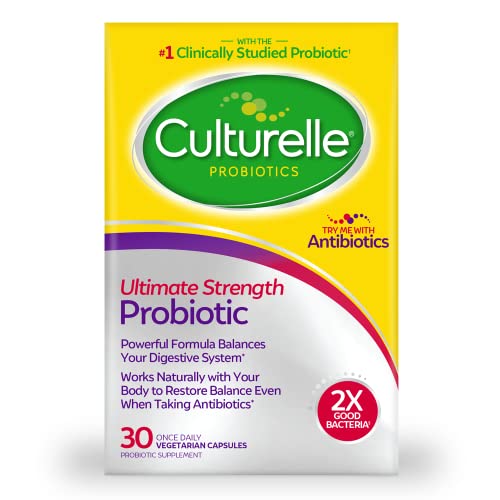
Ultimate Care Probiotic Culture Blend 100 Billion CFU
301 mg
***
Bifido Probiotic BlendBifidobacterium lactis BI-04®, Bifidobacterium lactis HN019™, Bifidobacterium infantis Bi-26™, Bifidobacterium lactis Bi-07®
54 Billion CFU
Lacto Probiotic BlendLactobacillus plantarum Lp-115®, Lactobacillus rhamnosus GG, Lactococcus lactis LI-23™, Lactobacillus casei Lc-11®, Lactobacillus paracasei Lpc-37®, Lactobacillus acidophilus La-14®, Lactobacillus acidophilus NCFM®, Lactobacillus brevis Lbr-35™
46 Billion CFU
Top Medical Research Studies
9
Lacticaseibacillus rhamnosus shows promise
We explored the potential of Lacticaseibacillus rhamnosus GG as a probiotic treatment against avian pathogenic E. coli (APEC) in chickens. Our study showed that this probiotic significantly reduced APEC colonization in the chickens' cecum and improved the balance of gut microbiota over a 24-hour period.
Through laboratory evaluations, we detected novel bioactive peptides in the probiotic's culture supernatants, which may contribute to its antibacterial properties. While the results are promising for poultry health, more research is needed to optimize its use in real farming conditions.
Through laboratory evaluations, we detected novel bioactive peptides in the probiotic's culture supernatants, which may contribute to its antibacterial properties. While the results are promising for poultry health, more research is needed to optimize its use in real farming conditions.
Read More
9
We investigated how a specific strain of Lactococcus lactis can help prevent food poisoning caused by a common pathogen found in raw milk and cheese. Our results showed a significant decrease in pathogen levels—by around 3 log CFU/mL—within just six hours when this strain was present.
Even more promising, it reduced the production of staphylococcal enterotoxin A (SEA) by 79%. In cheeses made with Lactococcus lactis, SEA was never detected, while it was found in higher levels in cheeses made without this protective strain. This study clearly shows Lactococcus lactis's potential in enhancing food safety through biopreservation.
Even more promising, it reduced the production of staphylococcal enterotoxin A (SEA) by 79%. In cheeses made with Lactococcus lactis, SEA was never detected, while it was found in higher levels in cheeses made without this protective strain. This study clearly shows Lactococcus lactis's potential in enhancing food safety through biopreservation.
Read More
9
Lactococcus lactis vaccine shows efficacy
We explored how Lactococcus lactis, when engineered to produce a harmless version of staphylococcal enterotoxin B (SEB), can offer protection against food poisoning caused by Staphylococcus aureus. In our study, mice that received the oral vaccine developed strong immune responses and were better able to survive challenging infections. Those immunized had significantly reduced bacterial counts in their spleen and higher levels of protective antibodies. This promising approach highlights the potential of using modified bacteria as vaccines against foodborne illnesses.
Read More
Most Useful Reviews
9
Prevents food poisoning
This is a fantastic product! I have been using these probiotics for years, especially when travelling to prevent food poisoning, and it works wonders.
Read More
7.5
Improved digestion
Really has enhanced my digestion; it feels like a safeguard when consuming foods that may not agree with my stomach.
Read More



Medical Researches
SCIENTIFIC SCORE
Moderately Effective
Based on 10 Researches
8.5
- All Researches
9
Lactococcus lactis enhances toxin immunity
We explored the potential of Lactococcus lactis (L. lactis) as an oral vaccine to fight against harmful Shiga toxins produced by bacteria such as E. coli O157:H7 and Shigella dysenteriae. In our study with BALB/c mice, those immunized with a specific strain of L. lactis showed impressive protection, with survival rates of 84% and 100% when exposed to these toxins. The immunization resulted in significant antibody production and minimized organ damage, demonstrating L. lactis's promising role in developing an effective oral vaccine against these toxins.
Read More
9
We investigated how a specific strain of Lactococcus lactis can help prevent food poisoning caused by a common pathogen found in raw milk and cheese. Our results showed a significant decrease in pathogen levels—by around 3 log CFU/mL—within just six hours when this strain was present.
Even more promising, it reduced the production of staphylococcal enterotoxin A (SEA) by 79%. In cheeses made with Lactococcus lactis, SEA was never detected, while it was found in higher levels in cheeses made without this protective strain. This study clearly shows Lactococcus lactis's potential in enhancing food safety through biopreservation.
Even more promising, it reduced the production of staphylococcal enterotoxin A (SEA) by 79%. In cheeses made with Lactococcus lactis, SEA was never detected, while it was found in higher levels in cheeses made without this protective strain. This study clearly shows Lactococcus lactis's potential in enhancing food safety through biopreservation.
Read More
9
Lactococcus lactis vaccine shows efficacy
We explored how Lactococcus lactis, when engineered to produce a harmless version of staphylococcal enterotoxin B (SEB), can offer protection against food poisoning caused by Staphylococcus aureus. In our study, mice that received the oral vaccine developed strong immune responses and were better able to survive challenging infections. Those immunized had significantly reduced bacterial counts in their spleen and higher levels of protective antibodies. This promising approach highlights the potential of using modified bacteria as vaccines against foodborne illnesses.
Read More
9
We aimed to find out if probiotic supplements like lactobacillus acidophilus could help counteract the negative effects of iron fortification, which has been linked to increased diarrhea and food poisoning among children.
In our study with weaning mice, we discovered that high iron diets led to more severe symptoms when infected with Salmonella.
However, when we added lactobacillus acidophilus beforehand, the mice showed less severe symptoms and better intestinal health.
This suggests that probiotics can really help protect gut health against the adverse effects of iron supplements during foodborne infections.
In our study with weaning mice, we discovered that high iron diets led to more severe symptoms when infected with Salmonella.
However, when we added lactobacillus acidophilus beforehand, the mice showed less severe symptoms and better intestinal health.
This suggests that probiotics can really help protect gut health against the adverse effects of iron supplements during foodborne infections.
Read More
9
Probiotics reduce Salmonella colonization
We looked at how an avian-specific probiotic could help reduce food poisoning risks linked to Salmonella Enteritidis in poultry. Our study used chicks that received a special probiotic treatment and compared them to a control group.
The results showed a marked decrease in Salmonella Enteritidis colonization in the treated chicks over several days, especially at days 3, 7, and beyond. However, body weight gains appeared similar between both groups.
Overall, our findings suggest that using Lactobacillus acidophilus as part of the treatment may effectively lower Salmonella risks in broilers.
The results showed a marked decrease in Salmonella Enteritidis colonization in the treated chicks over several days, especially at days 3, 7, and beyond. However, body weight gains appeared similar between both groups.
Overall, our findings suggest that using Lactobacillus acidophilus as part of the treatment may effectively lower Salmonella risks in broilers.
Read More
User Reviews
USERS' SCORE
Good
Based on 2 Reviews
8.5
- All Reviews
- Positive Reviews
- Negative Reviews
9
Prevents food poisoning
This is a fantastic product! I have been using these probiotics for years, especially when travelling to prevent food poisoning, and it works wonders.
Read More
7.5
Improved digestion
Really has enhanced my digestion; it feels like a safeguard when consuming foods that may not agree with my stomach.
Read More
Frequently Asked Questions
No FAQs are available for this product and symptom.
References
- Aljasir SF, D'Amico DJ. The effect of protective cultures on Staphylococcus aureus growth and enterotoxin production. Food Microbiol. 2020;91:103541. 10.1016/j.fm.2020.103541
- Sreerohini S, Balakrishna K, Parida M. Oral immunization of mice with Lactococcus lactis expressing Shiga toxin truncate confers enhanced protection against Shiga toxins of Escherichia coli O157:H7 and Shigella dysenteriae. APMIS. 2019;127:671. 10.1111/apm.12983
- Smialek M, Burchardt S, Koncicki A. The influence of probiotic supplementation in broiler chickens on population and carcass contamination with Campylobacter spp. - Field study. Res Vet Sci. 2018;118:312. 10.1016/j.rvsc.2018.03.009
- Tetili F, Bendali F, Perrier J, Sadoun D. Anti-Staphylococcal Enterotoxinogenesis of in Algerian Raw Milk Cheese. Food Technol Biotechnol. 2017;55:511. 10.17113/ftb.55.04.17.5105
- Nouaille S, Rault L, Jeanson S, Loubière P, Le Loir Y, et al. Contribution of Lactococcus lactis reducing properties to the downregulation of a major virulence regulator in Staphylococcus aureus, the agr system. Appl Environ Microbiol. 2014;80:7028. 10.1128/AEM.02287-14
- Asensi GF, de Sales NF, Dutra FF, Feijó DF, Bozza MT, et al. Oral immunization with Lactococcus lactis secreting attenuated recombinant staphylococcal enterotoxin B induces a protective immune response in a murine model. Microb Cell Fact. 2013;12:32. 10.1186/1475-2859-12-32
- Lin F, Wu H, Zeng M, Yu G, Dong S, et al. Probiotic/prebiotic correction for adverse effects of iron fortification on intestinal resistance to Salmonella infection in weaning mice. Food Funct. 2018;9:1070. 10.1039/c7fo00990a
- Kim MS, Yoon YS, Seo JG, Lee HG, Chung MJ, et al. A study on the prevention of salmonella infection by using the aggregation characteristics of lactic Acid bacteria. Toxicol Res. 2013;29:129. 10.5487/TR.2013.29.2.129
- Tellez G, Petrone VM, Escorcia M, Morishita TY, Cobb CW, et al. Evaluation of avian-specific probiotic and Salmonella enteritidis-, Salmonella typhimurium-, and Salmonella heidelberg-specific antibodies on cecal colonization and organ invasion of Salmonella enteritidis in broilers. J Food Prot. 2001;64:287. PubMed
- Kathayat D, Closs G, Helmy YA, Deblais L, Srivastava V, et al. In Vitro and In Vivo Evaluation of Lacticaseibacillus rhamnosus GG and Bifidobacterium lactis Bb12 Against Avian Pathogenic Escherichia coli and Identification of Novel Probiotic-Derived Bioactive Peptides. Probiotics Antimicrob Proteins. 2022;14:1012. 10.1007/s12602-021-09840-1

