Last update
6/20/2026
Reviewed By

Reviewed By
Overview
SCIENTIFIC SCORE
Possibly Effective
Based on 19 Researches
7.2
USERS' SCORE
Good
Based on 1 Review
8.4

Supplement Facts
Serving Size: 1 Softgel
Amount Per Serving
%DV
Calories
15
Total Fat
1.5 g
2%**
Saturated Fat
0.5 g
3%**
Cholesterol
10 mg
3%
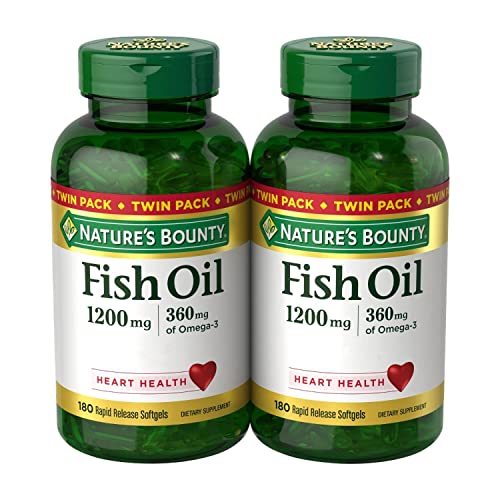
Fish Oilprovides 360 mg of Total Omega-3 Fatty Acids†comprising of:EPA (Eicosapentaenoic Acid)DHA (Docosahexaenoic Acid)Other Fatty Acids
1,200 mg (1.2 g)
***************
Top Medical Research Studies
9
We dove into the connection between omega-3 fatty acids and stroke risks by analyzing data from 29 global cohorts, involving over 183,000 participants.
Our findings revealed that higher levels of omega-3s, particularly eicosapentaenoic acid and docosahexaenoic acid, are linked to a reduced risk of total and ischemic strokes. Specifically, those with the highest omega-3 levels experienced a 17% lower incidence of total stroke and an 18% reduced risk of ischemic stroke.
However, it's important to note that omega-3 levels showed no impact on hemorrhagic stroke risk.
Our findings revealed that higher levels of omega-3s, particularly eicosapentaenoic acid and docosahexaenoic acid, are linked to a reduced risk of total and ischemic strokes. Specifically, those with the highest omega-3 levels experienced a 17% lower incidence of total stroke and an 18% reduced risk of ischemic stroke.
However, it's important to note that omega-3 levels showed no impact on hemorrhagic stroke risk.
Read More
9
We investigated the impact of docosahexaenoic acid (DHA) on stroke in diabetic mice. Our findings indicate that DHA significantly reduced brain damage and improved neurological functions.
The treatment not only decreased the inflammatory response but also lowered cell death within the brain. We noted remarkable changes in gene expression, suggesting that DHA promotes a protective environment in the brain after a stroke.
Overall, this research highlights DHA's potential as a therapeutic agent for stroke management in diabetic patients.
The treatment not only decreased the inflammatory response but also lowered cell death within the brain. We noted remarkable changes in gene expression, suggesting that DHA promotes a protective environment in the brain after a stroke.
Overall, this research highlights DHA's potential as a therapeutic agent for stroke management in diabetic patients.
Read More
9
We investigated the effects of docosahexaenoic acid (DHA), an omega-3 fatty acid, on brain recovery after stroke due to ischemia-reperfusion injuries. In a study involving rats, we discovered that DHA significantly reduced brain damage by shifting microglia from a harmful pro-inflammatory state to a protective anti-inflammatory one.
By promoting M2 microglia and modulating specific signaling pathways, DHA helped in reducing inflammation and supported healing. However, using a PPARγ antagonist inhibited these helpful effects, pointing to the importance of this pathway in DHA’s neuroprotective role.
By promoting M2 microglia and modulating specific signaling pathways, DHA helped in reducing inflammation and supported healing. However, using a PPARγ antagonist inhibited these helpful effects, pointing to the importance of this pathway in DHA’s neuroprotective role.
Read More
Most Useful Reviews
7.5
Regular intake advised
5 people found this helpful
Having had a stroke, my doctor recommended fish oil, which I’ve taken since 2005. It's one of my favourite brands. However, acquiring it can be challenging, especially as it serves as my prescribed medication. I appreciate that Amazon sells it, but I ensure I'm purchasing directly from Amazon, not a third-party.
Read More


Medical Researches
SCIENTIFIC SCORE
Possibly Effective
Based on 19 Researches
7.2
- All Researches
9
We investigated the impact of docosahexaenoic acid (DHA) on stroke in diabetic mice. Our findings indicate that DHA significantly reduced brain damage and improved neurological functions.
The treatment not only decreased the inflammatory response but also lowered cell death within the brain. We noted remarkable changes in gene expression, suggesting that DHA promotes a protective environment in the brain after a stroke.
Overall, this research highlights DHA's potential as a therapeutic agent for stroke management in diabetic patients.
The treatment not only decreased the inflammatory response but also lowered cell death within the brain. We noted remarkable changes in gene expression, suggesting that DHA promotes a protective environment in the brain after a stroke.
Overall, this research highlights DHA's potential as a therapeutic agent for stroke management in diabetic patients.
Read More
9
We explored the effects of combining omega-3 fatty acids and Copolymer-1 treatment on stroke recovery in a rodent model. The study used a two-phase approach, beginning with omega-3 supplementation followed by COP-1 immunization after a stroke event.
Results indicated that this combination led to significant improvements, including reduced neurological deficits and smaller infarct volumes. There was also a boost in neurogenesis.
These findings suggest a promising avenue for enhanced recovery in stroke patients when integrating dietary and medical strategies.
Results indicated that this combination led to significant improvements, including reduced neurological deficits and smaller infarct volumes. There was also a boost in neurogenesis.
These findings suggest a promising avenue for enhanced recovery in stroke patients when integrating dietary and medical strategies.
Read More
9
We dove into the connection between omega-3 fatty acids and stroke risks by analyzing data from 29 global cohorts, involving over 183,000 participants.
Our findings revealed that higher levels of omega-3s, particularly eicosapentaenoic acid and docosahexaenoic acid, are linked to a reduced risk of total and ischemic strokes. Specifically, those with the highest omega-3 levels experienced a 17% lower incidence of total stroke and an 18% reduced risk of ischemic stroke.
However, it's important to note that omega-3 levels showed no impact on hemorrhagic stroke risk.
Our findings revealed that higher levels of omega-3s, particularly eicosapentaenoic acid and docosahexaenoic acid, are linked to a reduced risk of total and ischemic strokes. Specifically, those with the highest omega-3 levels experienced a 17% lower incidence of total stroke and an 18% reduced risk of ischemic stroke.
However, it's important to note that omega-3 levels showed no impact on hemorrhagic stroke risk.
Read More
9
We investigated the effects of docosahexaenoic acid (DHA), an omega-3 fatty acid, on brain recovery after stroke due to ischemia-reperfusion injuries. In a study involving rats, we discovered that DHA significantly reduced brain damage by shifting microglia from a harmful pro-inflammatory state to a protective anti-inflammatory one.
By promoting M2 microglia and modulating specific signaling pathways, DHA helped in reducing inflammation and supported healing. However, using a PPARγ antagonist inhibited these helpful effects, pointing to the importance of this pathway in DHA’s neuroprotective role.
By promoting M2 microglia and modulating specific signaling pathways, DHA helped in reducing inflammation and supported healing. However, using a PPARγ antagonist inhibited these helpful effects, pointing to the importance of this pathway in DHA’s neuroprotective role.
Read More
8
Icosapent ethyl reduces stroke risk
We explored the effects of icosapent ethyl, a fish oil-derived treatment, on major cardiovascular events in patients with atherosclerotic cardiovascular disease (ASCVD). Over nearly five years, this treatment significantly reduced events like stroke, heart attack, and cardiovascular death, showing effectiveness across all risk levels.
The biggest benefits were observed in those at higher baseline risk, with noticeable reductions in adverse events. Even though icosapent ethyl doesn't eliminate risk completely, it provides valuable protection, especially for the most vulnerable patients.
The biggest benefits were observed in those at higher baseline risk, with noticeable reductions in adverse events. Even though icosapent ethyl doesn't eliminate risk completely, it provides valuable protection, especially for the most vulnerable patients.
Read More
User Reviews
USERS' SCORE
Good
Based on 1 Review
8.4
- All Reviews
- Positive Reviews
- Negative Reviews
7.5
Regular intake advised
5 people found this helpful
Having had a stroke, my doctor recommended fish oil, which I’ve taken since 2005. It's one of my favourite brands. However, acquiring it can be challenging, especially as it serves as my prescribed medication. I appreciate that Amazon sells it, but I ensure I'm purchasing directly from Amazon, not a third-party.
Read More
Frequently Asked Questions
No FAQs are available for this product and symptom.
References
- Aggarwal R, Bhatt DL, Steg PG, Miller M, Brinton EA, et al. Cardiovascular Outcomes With Icosapent Ethyl by Baseline Low-Density Lipoprotein Cholesterol: A Secondary Analysis of the REDUCE-IT Randomized Trial. J Am Heart Assoc. 2025;14:e038656. 10.1161/JAHA.124.038656
- Liu C, Guo J, Guan L, Li C, Hu X, et al. Docosahexaenoic acid protects against ischemic stroke in diabetic mice by inhibiting inflammatory responses and apoptosis. Exp Neurol. 2025;385:115075. 10.1016/j.expneurol.2024.115075
- Cruz-Martínez Y, Cantú K, Ojeda G, Gálvez-Susano V, Arias-Santiago S, et al. Two-phase therapy for improving neuroprotection and neurogenesis: Preventive use of omega fatty acids plus Copolymer-1 immunization after stroke. Brain Res. 2025;1846:149277. 10.1016/j.brainres.2024.149277
- Xi C, Zhang J, Liu H, Tao S, Xie Y, et al. Can Omega-3 prevent the accidence of stroke: a mendelian randomization study. Hereditas. 2024;161:30. 10.1186/s41065-024-00329-9
- Chen HC, Tai CJ, Huang JY, Kuo TA, Huang YD, et al. Associations of fish oil with cardiovascular disease events: results from the Taiwan longitudinal study in aging. BMC Public Health. 2024;24:1979. 10.1186/s12889-024-19512-8
- Miyauchi K, Iwata H, Nishizaki Y, Inoue T, Hirayama A, et al. Randomized Trial for Evaluation in Secondary Prevention Efficacy of Combination Therapy-Statin and Eicosapentaenoic Acid (RESPECT-EPA). Circulation. 2024;150:425. 10.1161/CIRCULATIONAHA.123.065520
- Burger PM, Bhatt DL, Dorresteijn JAN, Koudstaal S, Mosterd A, et al. Effects of icosapent ethyl according to baseline residual risk in patients with atherosclerotic cardiovascular disease: results from REDUCE-IT. Eur Heart J Cardiovasc Pharmacother. 2024;10:488. 10.1093/ehjcvp/pvae030
- Liakos CI, Lanaras L, Bristianou M, Papadopoulos DP. Pleiotropic beneficial cardiometabolic actions of a high-purity eicosapentaenoic acid product in high cardiovascular risk individuals. Lipids. 2024;59:67. 10.1002/lipd.12391
- Gaengler S, Sadlon A, De Godoi Rezende Costa Molino C, Willett WC, Manson JE, et al. Effects of vitamin D, omega-3 and a simple strength exercise programme in cardiovascular disease prevention: The DO-HEALTH randomized controlled trial. J Nutr Health Aging. 2024;28:100037. 10.1016/j.jnha.2024.100037
- O'Keefe JH, Tintle NL, Harris WS, O'Keefe EL, Sala-Vila A, et al. Omega-3 Blood Levels and Stroke Risk: A Pooled and Harmonized Analysis of 183 291 Participants From 29 Prospective Studies. Stroke. 2024;55:50. 10.1161/STROKEAHA.123.044281
- Luan M, Wang J, Liang K, Li B, Liu K. Association between the intake of dietary n3 and n6 fatty acids and stroke in US adults: A cross-sectional study of NHANES 2007-2018. PLoS One. 2023;18:e0293893. 10.1371/journal.pone.0293893
- Ogata S, Manson JE, Kang JH, Buring JE, Lee IM, et al. Marine n-3 Fatty Acids and Prevention of Cardiovascular Disease: A Novel Analysis of the VITAL Trial Using Win Ratio and Hierarchical Composite Outcomes. Nutrients. 2023;15. 10.3390/nu15194235
- Lv H, Jia S, Sun Y, Pang M, Lv E, et al. Docosahexaenoic acid promotes M2 microglia phenotype via activating PPARγ-mediated ERK/AKT pathway against cerebral ischemia-reperfusion injury. Brain Res Bull. 2023;199:110660. 10.1016/j.brainresbull.2023.110660
- Liu Y, Wang W, Cui X, Lyu J, Xie Y. Exploring Genetic Associations of 3 Types of Risk Factors With Ischemic Stroke: An Integrated Bioinformatics Study. Stroke. 2024;55:1619. 10.1161/STROKEAHA.123.044424
- Olshansky B, Bhatt DL, Miller M, Steg PG, Brinton EA, et al. Cardiovascular Benefits of Icosapent Ethyl in Patients With and Without Atrial Fibrillation in REDUCE-IT. J Am Heart Assoc. 2023;12:e026756. 10.1161/JAHA.121.026756
- Bork CS, Lundbye-Christensen S, Venø SK, Lasota AN, Tjønneland A, et al. Intake of marine and plant-derived n-3 fatty acids and development of atherosclerotic cardiovascular disease in the Danish Diet, Cancer and Health cohort. Eur J Nutr. 2023;62:1389. 10.1007/s00394-022-03081-w
- Suzuki K, Sato H, Mori H, Matsumoto R, Arimoto Y, et al. Early Enteral Nutrition with High-Protein Whey Peptide Digestive Nutrients May Improve Prognosis in Subarachnoid Hemorrhage Patients. Medicina (Kaunas). 2022;58. 10.3390/medicina58091264
- Andone S, Farczádi L, Imre S, Bălașa R. Fatty Acids and Lipid Paradox-Neuroprotective Biomarkers in Ischemic Stroke. Int J Mol Sci. 2022;23. 10.3390/ijms231810810
- Yokoyama Y, Kuno T, Morita SX, Slipczuk L, Takagi H, et al. Eicosapentaenoic Acid for Cardiovascular Events Reduction- Systematic Review and Network Meta-Analysis of Randomized Controlled Trials. J Cardiol. 2022;80:416. 10.1016/j.jjcc.2022.07.008

